Barrel Body Winter Warmer

WinterWarmerW
I’m not a big fan of winter. In late October, scraping enough frost off the windshield to make a frozen Daiquiri, I’m dreading the ice to come. White Christmas is great. January skiing is fun. But as a California guy, by February I’m ready to go on a picnic.

That said, one thing that sustains me through the frigid season is Winter Warmer. A roaring fire, a good book, and a righteous, spicy ale make all the difference when the wind blows cold, the snowflakes fly, and the nights are long.

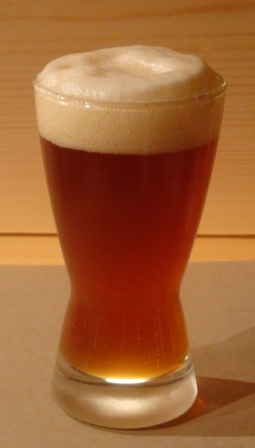
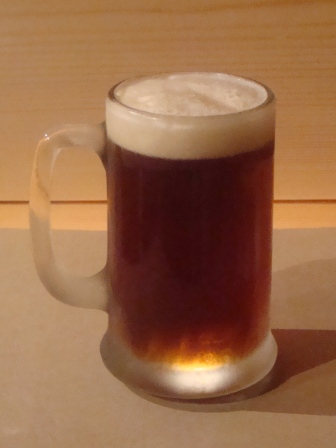
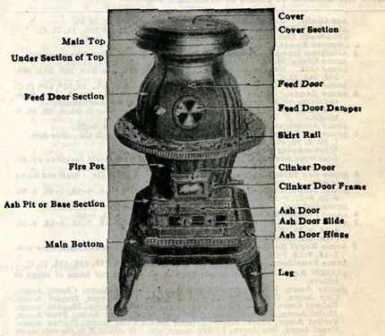
In the old days, folks could huddle around the barrel body of a pot-belly stove to keep warm. These days, even a gas log will do if there’s a fine winter warmer close at hand. Barrel Body Winter Warmer fills the bill.
potbelly-stove-sale

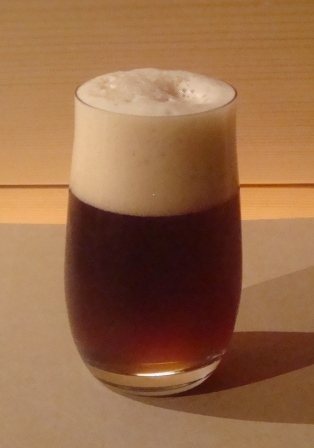
Barrel Body starts out as a pretty straightforward copper ale. A full grain bill augmented with lots of caramel and crystal malt is topped off with Melanoidin malt to boost the red color, and provide plenty of heavy mouthfeel. The recipe adds golden sugar and Belgian dark aromatic candi to raise the starting gravity and tweak the umami.

The baseline spiciness comes from cinnamon and nutmeg. To kick it up a notch, a hint of Voodoo Elixir in the secondary fermenter adds flavors of coffee, chicory, cubeb, gumbo, licorice, sassafras and sarsaparilla.

Safale US-05 ferments this one out full and dry. At about 7.9% ABV, Barrel Body Winter Warmer lives up to its name.

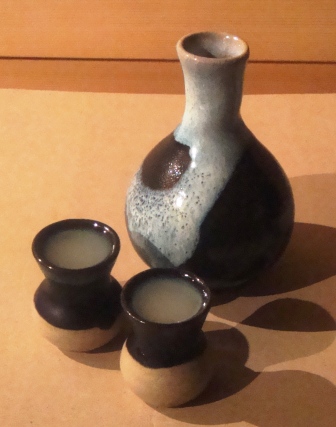
Hakkō Chairo Amazake

HardAmazakeWAmazake can be considered a “precursor” to sake. In sake fermentation, steamed rice starches are converted to sugar with the use of a catalyst named kome koji–fungus-infected rice; then the sugar is fermented using conventional saccaromycetes.

And as is with the unfermented barley-based soft drink Malta, there is a Japanese version using rice: amazake. Amazake is, theoretically, the sugary mash that is formed when the fungus A. oriazye saccarifies starches in the rice, but before yeast turns those sugars into alcohol. Amazake is refrigerated or consumed shortly after the conversion is comeplete.

However, if the mash is allowed to continue sitting at room temperature, it will start to bubble and fizz, as sugar is metabolized into alcohol and carbon dioxide. You get a mild sake anyway: hard, “Hakkō” amazake if you will.

If you make amazake out of brown (chairo) rice you get a drink that is much more flavorful than the traditional recipe that calls for glutinous white rice. Sweet glutinous white rice forms the key ingredient in the Japanese dessert “mochi.” This sweet rice is available in a brown version too, with all the more rounded umami flavor characteristics you would expect.

Because koji has fermented out all the sugar that is in a conventional amazake, this version adds back a bit of rice syrup solids to balance the tartness of the citric acid used to prevent wild yeast infection. The drink is back-sweetened, then pasteurized in bottles. Served slightly chilled, the flavor is a sweet-tart burst, balanced with umami flavors of toast, caramel and mushroom.

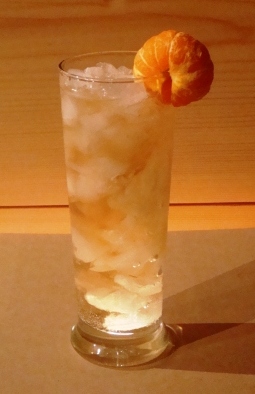
Triple Twichell

TripTwichWInspired by the type of strong Belgian brews known as “Dubbels” and “Tripels”, Triple Twichell takes the idea of a Mandarin/Seville orange soda and multiplies the amount of ingredients–except the water–by three.

As with the original Orange Twichell recipe, this drink blends two kinds of orange juice, and two kinds of orange zest with raw cane juice, ginger, Veronica spicata, and Sedona juniper berries.

The result is an intense, yet well-balanced soft drink that is bursting with flavor and orange aroma. The drink is made with a fruit syrup and herb infusion, finished with sparkling mineral water. It will improve noticably with an aging period of several weeks in the refrigerator. Aging allows the fruit pulp to settle out, and this can be suspended again with gentle agitation. Alternately, the drink can be carefully decanted off the settled pulp to provide a clear, golden yellow beverage.

Scott’s Revenge BC Brown Ale

BCBrownW
British Columbian brewers have been trying hard to establish a unique style of beer, in the shadow, alas, of the huge brewing scenes of Washington and Oregon. Those two states, in turn, have led with their own brewing evolution, against the mega-hopped IPAs of Southern California.

The trend in all three Northern areas has been to less aggressively bitter, but no less flavorful beers, including Northwest Pale Ale, with the characteristically citrus-flavored hop varieties now emerging from the Oregon/Washington growing region.

In the 1940s B.C. grew more hops than any other region of the Commonwealth. The Molson Export recipe of that time specified only “B.C. Hops.” But since 1997 or so, there had been almost no commercial hops grown in British Columbia. Recently, however, that trend is reversing, as the demand from craft brewing again makes hop growing a viable industry in B.C.

What does not seem to be occurring though, is the expansion of flavor sensations accomplished by full-spectrum recipe formulations. B.C. beers, though tasty, frequently lack complexity. Scott Beauchamp, manager and buyer at Nelson Liquors in Nelson B.C. has tasted a lot of British Columbia beers, and he agrees. That’s why I brewed a full-spectrum beer using B.C. hops, with him in mind: Scott’s Revenge. The color is really more of a dark amber to copper, and the aroma is dominated by malty notes, with very light hoppiness.

Scott’s B.C. Brown has plenty of caramel flavors from five grades of crystal, plus CaraAroma and CaraMunich malts. Chocolate and Black Prinz malts provide deep roasty flavors.

The hops were grown in Nelson, B.C. and consist of a blend of Nugget, Willamette, Fuggle and Golding varieties. They were lightly air-dried for a week before going into the brew in three additions. Safale US-05 fermented it out nice and dry.

Next season I will likely get a bigger Golding crop, and I plan to try this recipe again with wet-hop and dry-hop additions. Then Scott’s revenge against bland B.C. ales will be complete.

Simba Oshikundu

SimbaW
Simba is Swahili for lion, and in Namibia, Oshikundu (also known as Ontaku) is a naturally fermented beverage of varying alcoholic strength. Some is mild enough for children, in the way that fermented kombucha is. Some is strong enough that you’d better not drive that lorry from Windhoek to Walvis Bay.

Traditional oshikundu is made from pearl millet flour. The people of Namibia call their millet mahangu. Meme Mahangu is the brand to look for, produced by Namib Mills Ltd. and sold in a premixed bag containing a bit of sorghum flour for added flavor.

A small amount of hot water is blended with the flour to form a slurry, and then a starter, known as oshihete shoshikundu—a small amount of the previous batch—is added. This is left to ferment overnight, and in the morning more water and some sugar is added to continue the fermentation. In 24 to 48 hours the beverage is ready to drink: a little fizzy, a little sweet and a little tart.

Needless to say, oshikundu starter is hard to come by outside of Namibia, as is, for that matter, mahangu. For the enterprising fermentation hobbyist however, there are work-arounds that produce a very nice and in several ways inebriating beverage.

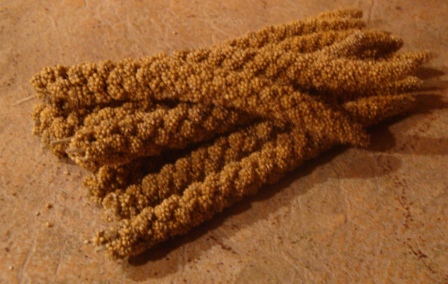
A trip to the health-food store, or even the bulk food section of the supermarket will likely not turn up the key ingredient of Simba Oshikundu. That is unhulled millet. The grain found in food stores is invariably hulled, as it has been prepared for eating and cooking as a cereal grain. Hulled millet cannot be sprouted satisfactorily, and this process is important to the creation of the malted millet that forms the base grain of Simba Oshikundu.
MilletW1b
There is, however, a plentiful supply of unhulled millet readily available in stores, and that is—Budgie Mix. Yes, you can make oshikundu from bird seed, and in fact, the flavor is superior to that made of plain millet. The important consideration is to find a mix that has only seeds in it, and this is usually provided in bulk. The mix that went into Simba Oshikundu consisted of about two-thirds red and white millet, with the remainder made up of canary grass, niger seeds, sesame seeds, and brown flax. I was initially skeptical, but as it turns out, those budgies know good chow!

The seeds sprouted very well after about four days, and were dried in an oven until they were golden in color, and toasty in flavor. Then they were ground into as fine a powder as was possible in a small food processor. I used the same technique to produce a malt flour from some millet sprays, which are also sold as bird seed. This added an even more toasty flavor to the blend.

I mixed the coarse flour with water in a stainless steel pot to make a stiff mash, and raised the temperature to 65-70 C (150-160F.) I added amylase enzyme for good luck and held the mash at that temperature for 18 hours, adding more hot water as the grains absorbed the liquid. The resulting flavor was mildly sweet and grainy.

Then in went three kinds of African flowers: Lion’s Tail, Nile Lily, and Lotus Blossom. I brought the mixture to a boil, and simmered it for 20 minutes. Instead of sugar I added wildflower honey, brought the mash back to a boil, and then cooled it quickly to room temperature. I pitched California ale yeast and yogurt starter into the cooled mash, covered it and let it ferment three days at about 26C (80F).

When the fermentation was complete I ladled the mash into a large metal strainer to separate the liquid from the grains, and gently poured the brew into swing top bottles, which went directly into the refrigerator.

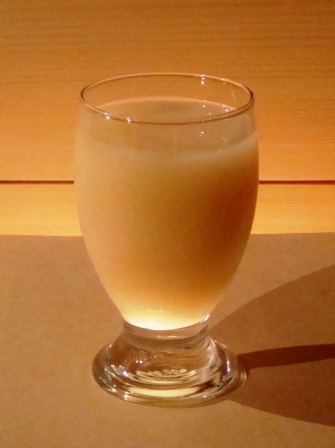
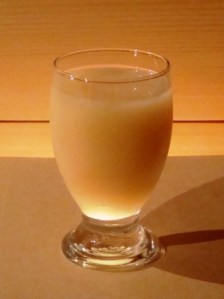
Simba Oshikundu is above all a silky smooth, creamy beverage. It is packed with the nutritional value associated with millet, and is gluten free. The yeast and lactobacillus add probiotic factors. If you can find a source for Bambera ground nut, it can be made even more nutritious.

The flavor is indeed a bit tart, and it can be sweetened with sugar or more honey. I prefer it fairly dry. The flowers produce a subtle bitterness, and a subtle sense of well-being that is enhanced by the moderate alcoholic strenth of the beverage. Since the official language of Namibia is English, you should do fine just raising a glass and declaring “Cheers!”
Ziegensauger Doppelmaibock

Dpils24
What would you get if you tripled every ingredient in a lager beer except the water? Zeigensauger Doppelmaibock: a recipe that has evolved from the German bock lager tradition, but inspired also by ‘t Ij Columbus beer, brewed in Amsterdam.

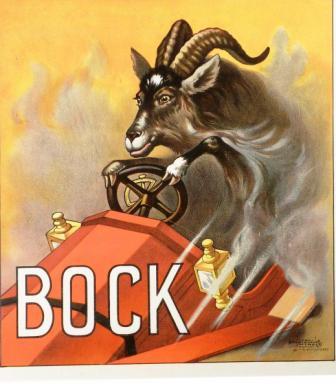
Ziegensauger, like Columbus, comes in at 9% ABV, making it considerably stronger than Maibock-style beer, which traditionally maxes out at around 7.5%. That makes this a Doppel Maibock! The traditional symbol of bock beer, the goat, has been consumed in this case by the German version of the Chupacabra. Zeigenrsauger is a goat hell-bent on destruction. bock goatw

Zeigensauger gets its fullness of flavor from a micro-mash of pale, pale crystal, Munich, CaraPils, and even black malt. The backbone is provided by 3.4 kilos of Cooper Pilsner extract, and 1.5 kilos of Breiss extra light DME. The beer is hopped with German Hallertau, Crystal, Pearle and Saaz varieties for the main additions, and dry-hopped with more Hallertau, which lays down a spicy aroma beside the rich maltiness.

Wyeast 2112 California Lager yeast, with its high alcohol tolerance, ferments the brew for four months at a temperature below 16 C (61 F.) It is bottled using corn sugar syrup made with a Saaz hop tea. Held another two to six months, this is a monumental beer that crashes around like a goat, sucker!

Call it Frisco Barley Wine

FriscobarleywinewIt was Herb Caen who popularized the “Don’t call it Frisco” meme, though the sentiment dates to at least 1918. Well, it’s ok if you call it Frisco. In fact, a few San Francisco hipsters call it Frisco just to tick off the posers.

I call my barley wine Frisco. My first encounter with barley wine was Anchor Brewing’s Old Foghorn. In 1975 that brew was a ton of flavor in a land of expansive blandness. Frisco Barley Wine is my tribute to that revelation.

My second barley wine experience was with Thomas Hardy’s Ale, the brewers of which managed to cram an entire six-pack of beer into a 180 ml bottle. Frisco Barley Wine attempts to create the cellaring potential of the Hardy ale.

Frisco splits the difference in ABV between Old Foghorn and Hardy, coming in at about 9.5% ABV. The color is a very dark gold/amber with hints of red in it; less brown than Old Foghorn, less copper than Hardy. It was important to make the hop addition “exquisite,” as the Old Foghorn label copy specified! So I chose the Nugget/Willamette blend I’d grown that season. These provided a nice bitterness and flavor with no aroma, as I wanted the nose to be very malty. For this reason I skipped dry hopping too.

Speaking of malty, Frisco is mashed from predominantly Maris Otter malt, with Gambrinus Vienna, and Breiss Extra Special Roast adding significant malty depth. The grain bill is rounded out with eight other specialty malts that contribute breadiness, toastyness, caramel, ruby color, and atringency.

I wanted the beer to ferment out quickly from its 20 Plato start, and so I chose the workhorse Safale S-04 English ale yeast. This knocked the gravity down to about 4 Plato in less than three weeks, leaving a moderately fruity finish with no residual sugar. The caramelly sweetness still comes through however, but with significant bitter end notes. This one is going to age well, but with only 16 bombers in the batch, I hope it can last through next Christmas!

Big Chico Creek Water

BigChicow

Big Chico Creek runs ice cold out of the Colby Mountain watershed, over the basalt rocks of the Lassen volcanic shield, and through Bidwell Park and Cal State University in Chico, California. When the temperature hits 117 F in downtown Chico, the swimming holes of Big Chico Creek offer a welcome relief.

Big Chico Creek Water is another ice-cold treat for a hot summer day. I first brewed it for a Fourth of July party I went to in Chico. The hostess, my boss, had invited a few of her employees over for the party, but when we got there it became obvious that we were expected to be wait staff for the real guests, who were her neighbors! The most ambitious guy among us went over to the barn and mucked out the stalls. Big Chico Creek Water offered a welcome relief….

Big Chico Creek Water has no fixed recipe. A beer constructed of leftover amounts of specialty grains, it nonetheless retains certain characteristics. It is very malty, dark amber, with assertive hop bitterness and hop aroma, medium-full body and a bitter finish. Its 5.5 to 6% ABV makes it a bit more than a session beer, but still eminently quaffable. The key ingredient is the “Chico” California ale yeast, which produces a dry but malty beer with a nice full flavor accentuating the hops.

A typical recipe is about 75% pale malt. Anywhere from 400 to 700 grams of specialty malt for a 20 liter batch provide the amber maltiness. This version uses Cara Munich, crystal blend, Special B, Breiss Extra Special, chocolate, and black malts. Flaked barley contributes graininess and a full head.

As with the grain bill, the hop additions vary depending on what is at hand. I have used Nugget, Columbus, Ahtanham, Kent Golding, Challenger, Chinook, Cluster, Cascade, Styrian, Fuggle and Willamette in various combinations. This one is a melange of home-grown hops. A bit of gypsum and sea salt adds an edge to the hop ingredients.

This is a great beer if you want to be drinking a full, rich malt-hop extravaganza in less than four weeks. The yeast ferments quickly, drops out fast, and leaves a bottle-ready brew right in the primary fermenter. Two weeks in the bottle and the potion is dry and smooth, though it will develop its complex flavor for six months or more.

Umami Hack: Cooper Pils

Cooper HackAll-grain home brewing may be the ultimate umami experience when it comes to beer, but sometimes it’s just too hard to find the six to eight hours it takes to homebrew from scratch. Sometimes 20 minutes for a kit beer is all there is time for. The brewer who is able to put in an extra hour though, can change a mediocre canned kit into a very nice session beer.

The base for this beer is Thomas Coopers Selection Pilsener liquid extract, prehopped with Saaz hops. The Coopers Selection series are marketed as premium products, although they are typically priced the same as all the other Coopers extracts. Coopers recommends the kit be made with 500 grams of dry malt extract and 300 grams of corn sugar. The instructions for making a batch say that the ingredients should be merely stirred into six gallons of hot water, which I have found results in a weakly-flavored beer of perhaps 4% ABV.

The key to the hack is a mini-mash of Munich and Victory malts, flaked barley and sea salt. Munich malt is typically used in Bock-style beers, and contains enough enzymes to convert its starches to sugar. It’s a bit darker than pale malt; the type in this recipe is about 10 Lovibond in color and adds a smooth malty sweetness to the beer. Victory malt is a Breiss Malt specialty roast that adds a clean nutty, baked bread flavor. Both of these are used only in small amounts to add roundness and complexity to the flavor of the standard kit brew. The flaked barley adds mouthfeel and enhances head retention. Sea salt reacts with the umami-producing components of the malted grains to increase the roundness of flavor.

To hack the kit I extracted about a gallon of wort from my mini-mash, added two more gallons of filtered water, brought this to a boil and poured in a half-kilo of light dry malt extract. This was simmered for a half hour, with 20 grams of fresh Willamette hops added continuously during the boil: five grams every seven minutes.

The Cooper Pilsener extract was added with five minutes left to the boil. A half-kilo of corn sugar was added at the last minute. The wort was cooled and topped up to make 20 liters. Starting gravity was 12.5 Plato.

I have found that the Coopers premium Pilsener yeast supplied with the kit actually works pretty well, delivering a crisp dry taste when the brew is fermented and lagered at cellar temperature (about 60F or less.) I speculate that Coopers has worked on developing a strain that will produce good results without the average home brewer needing to invest in a special lager brewing set-up that will maintain colder temperatures.

This turned out to be a very nice golden lager that I was able to make, with the kit on sale, for about $20. With a firm white head and an aroma of malt and hop spiciness, it is full-bodied, with a good malty flavor finished with considerable hop bitterness. The ABV is about 5.3% making it a decent tipple. Its nonetheless moderate alcoholic strength makes it a beer that is fine for a couple of pints after a hard day hacking bits down on the cube farm.

Sparkling Dry English Cider

Sparkling English CiderSparkling hard cider may hold only 1% of the beer market, but sales grew 84% in 2012, eclipsing by far the 17% growth rate for craft beer. A well-made cider is certainly a thing of beauty, but even a middle-market commercial cider offers a welcome respite from high amplitude hop bombs.

In the UK and Ireland though, beer and cider taps exist as equals at the pub. Locally crafted brands of cider have been there for decades. The key to these brands’ drinkability is the care that goes into the blending of juices that create a full-spectrum flavor.

English ciders are known for the blend of varieties specifically grown for the purpose. These apples are virtually unobtainable outside the small areas in which they are grown. It’s possible to make a good beverage without them, however, with a little creativity.

The recipe for this cider starts with a base of Cortland, Red Delicious and Gold Delicious sweet apples. Gravenstein and McIntosh varieties provide aroma, and Jonagold offers tartness. Crab apples substitute for English cider apples in furnishing tannins, as well as additional acid. The apples were milled, and pressed to express blended juice, which was pitched with White Labs’ WLP775 English Cider yeast. A malolactic culture was added to the secondary fermenter to make the acid flavor more smooth. Oak chips contribute a mild, woody barrel taste and aroma.

While this doesn’t qualify as an English Farmhouse Cider–it was sweetened a bit with wine conditioner and carbonated with the Charmat process, it is an excellent brut with about 1% residual sugar, well-balanced acid and a full, rich vanilla flavor with very light oaky background notes. The aroma is quite apple-y, and an empty glass retains this for quite some time. It’s disappearing from the cellar very quickly.