New Creston Barrel Cider

Creston Barrel Cider New Englanders of the 17th and 18th Centuries were known for their consumption of prodigious amounts of rum. Less expensive and easier to come by were large quantities of apple juice, from nearby orchards. But the modestly alcoholic beverage made from fermenting pure apple juice was unlikely to satisfy the jaded palates of the aldermen. Faced with the prospect of imbibing a mere 5% ABV, New Englanders resorted to various adjuncts, including sugar, raisins, molasses, and honey, which, upon fermentation, would raise the alcoholic content of the drink to a more respectable 10 percent or so. This they would age in oak barrels, with perhaps some handfuls of wheat, which would moderate its taste “be it harsh and eager.”

New Creston Barrel Cider is so named because the apples come from the Creston Valley of British Columbia. Creston is known for the wide variety of apples grown there, and this is a key factor in the making of superior cider. When I first started making hard cider I would buy a few gallon jugs of apple juice from the likes of Trader Joe’s and Whole Foods, pitch some yeast, wait a while, and decide I really didn’t like hard cider very much.

Then I discovered blending. Mixing the juice from several varieties of apples creates the full-spectrum experience that is typical of complex recipes. In the case of hard cider, the blend of juice should include sweet, tart, bitter and aromatic apples. For traditional barrel cider, the sensation of umami can be created with an addition of grapes and grains.

New Creston Barrel Cider starts with a blend of Jonagold (tart), McIntosh (aromatic) Spartan and Gala (sweet) apples. To add umami I took 25 grams of Sultanas and 25 grams of Malawi “Sucre de Canne Brut” per liter of juice, added 12.5 grams per liter of cracked dark wheat malt, and simmered these in South African Muscat grape juice for 20 minutes. I added this mash to the fermenter, and noted that it would make a terrific breakfast cereal!

I’ve recently found that unpasteurized Creston apple juice will ferment nicely with its natural yeast, but it can be a risky proposition with unpredictable results. For this batch I pitched a starter of White Labs WLP720 Sweet Mead yeast in malt powder with a little yeast nutrient.

As barrels are a pain to use and maintain, I’ve added barrel flavor to other batches by using French oak chips. For this version I left them out. Instead, when fermentation was complete and the cider well-aged, I added crab apple syrup made with equal parts of crab apple juice and sugar. This gives the cider the tannic, bitter principle of a full-spectrum blend, with a semi-sweet flavor. With three years of aging, it’s a beautiful cider, with a lovely apple aroma, super clear, sweet, yet still tart. The sultanas give it a moderately full body, and the wheat provides a soft finish. Luscious.

Orange Twichell

jigger The concept of full-spectrum fermentation and the incorporation of umami-producing flavor sensations in beverages suggests that these concoctions should be balanced in character. The concentration of complex tastes and aromas exist for each creation in varying amounts depending on the nature of the drink.

Orange Twichell is an example of a fermented beverage that is extremely low in alcohol–so low in fact as to be considered “non-alcoholic” under the law. Actually, it contains something between 0.1 percent and 0.3 percent alcohol, and at that level the body metabolizes it faster than it can be consumed.

Naturally occurring yeasts and bacteria live on the skins of fruits, a fact experienced in ancient times when humans felt kind of funny after drinking grape juice that had been sitting around for a while. Oranges, in this case, contain about 0.1 percent alcohol when they are picked, and this rises during the time they are stored.

A couple of years ago in a specialty store I came across an attractive bottle labeled Fentimans Orange Jigger. I bought a bottle and tried it out. It was nice, but expensive. I thought I’d try to make my own. It turned out nice too, and quite a bit less costly. The idea was to create a balanced drink combining sweetness, bitterness, sourness, saltiness and umami.

The ingredient and nutritional labeling for Orange Jigger contains plenty of clues to its composition, and a look at the Fentimans website provided more information. There’s Mandarin orange juice in Jigger, and as I recall Seville orange juice too, although the drink is now described as having Seville Orange zest in it. The label also mentioned ginger, juniper berry, and speedwell. The nutritional information told me how much sugar was in it.

It was enough to have a go at it, and even make some tweaks along the way. My recipe starts with 30 percent fruit juice. The trick to this blend is to wait around until the Seville Oranges and Mandarins come into season, around January or February in the Northern Hemisphere. Mandarins are easier to come by during the rest of the year, but to make Orange Twichell in June I need to squeeze and zest the Sevilles and freeze the result.

The Fentimans website suggests that its beverages are fermented with brewers yeast. I tried brewing with ale yeast and wine yeast for a couple of batches but I found the yeasty flavor overpowering. For my latest batch I tried a different approach. I let the oranges sit in cool storage for a week, then squeezed them and refrigerated the juice for another four days. This resulted in a more subtle flavor change.

I needed a few tries to settle on the right amount of ginger and juniper too. For the ginger about 2.5 grams per liter of finished drink seems about right to me. Raw ginger contains about 2 percent protein, enough to give the umami sensation a bit of a boost. It also contains potassium, for a very subtle salt taste.

The juniper berries are an interesting story. I’ve tried the commercially available ones with success, but the best so far were ones that I happened to have picked in the mountains behind Sedona Arizona, quite on a whim. They’d languished in a bottle in the spice cabinet for 25 years when I rediscovered them. They were still in perfect condition–soft, spicy, and intensely sweet. The piney characteristic of fresh berries had turned into more of a citrus flavor.

The “speedwell” addition took a bit of research. I’d never heard of it, but it turns out to be a common botanical in England. Almost a weed, Veronica Officinalis seems to grow everywhere. I couldn’t get any, but the local nursery had the related ornamental variety Veronica Spicata. I grew some, dried the leaves and used about .25 grams per liter of finished beverage. In the intervening years I’ve tried both and I find the Spicata flavor much nicer.

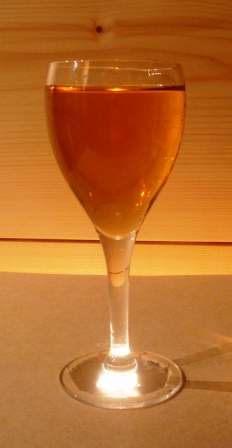
I took all the ingredients plus organic evaporated cane juice (another source of glutamic acid) and heated the mixture to steep out the flavors, strained out the berry husks, shredded ginger and citrus zest. I reheated it to pasteurize the juice and let it cool. I dispensed 150 ml of the juice blend into each of 20 half-liter swing top bottles and put these in the freezer. When the juice was frozen I topped the bottles up with carbonated spring water. I keep the bottles chilled until I’m ready to serve the excellent results.

A note on the name: If Fentimans has not trademarked “Orange Jigger” they should, as it is a great name. Fentimans says “jigger” refers to an old English term meaning “good measure.” Seeking a name that would suffice while respecting the Fentimans brand, I saw that “jigger” can also refer to an alleyway in Liverpool. In Nottinghamshire an alleyway is commonly called a “twichell.” I liked the word twichell, so there it is!

Northwest Pale Ale

NWPA I picked up a bottle of Deschutes Red Chair NWPA on a trip through Spokane, Washington, intrigued by the nice label art, and by the brewery’s claim to have created the first Northwest Pale Ale. I’ve never had a Deschutes beer I didn’t like, and the neck ring copy–offering a plush, satiny experience featuring “edges out, layers in”–sounded promising.

Tired of in-your-face, over-the-top hop madness, I decided to check it out. I was not disappointed. Eager to join the NWPA trend, I figured the skiing metaphor suggested a beer that turns agreeably, with a smooth ride featuring layers of citrus, tropical fruit and a malty finish. The label mentioned seven European and North American malts. ABV was 6.2%: assertive, but not the alcoholic blast of some of the runinators.

The Deschutes website now offers a recipe for a Red Chair clone, though it is very light on details. There’s only six malts mentioned, and the hops are Centennial and Challenger, not my idea of tropically fruity additions. Last fall I made up my own recipe, and I believe I came up with a version that nicely represents Northwest Pale Ale.

I started with Briess DME plus some Belgian extra dark aroma sugar and dark candi sugar. I steeped six kinds of crystal malt together with touches of chocolate wheat, cara-aroma, cara-pils and melanoidin malt to put a hint of redness in the color. As I was brewing in early September, I had a chance to try out another West Coast innovation: wet hopping. I used freshly-harvested homegrown Nugget, Willamette and Fuggle hops, added continuously during a one-hour boil.

I pitched White Labs’ WLP 090 San Diego Superyeast for this one, because of its clean flavor profile and relatively high attenuation. I wanted an emphasis on malt and hop aromas and flavors, not yeastiness. The beer started at 13 Plato.

After six days I racked the beer into a carboy and added 6 grams of sea salt. Ten weeks later I added 14 grams of Citra pellets to the carboy, and let it rest for a month and a half.

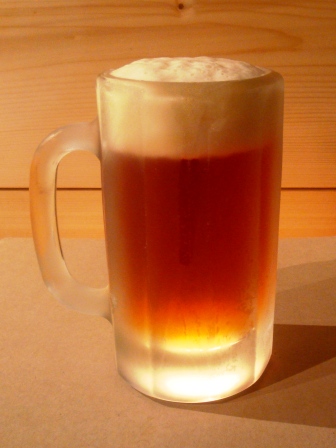
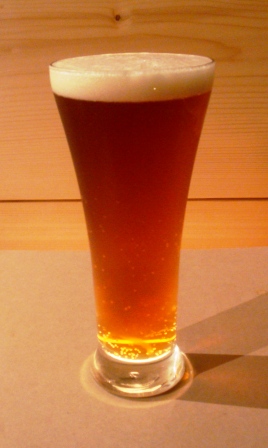
Finishing at 1.25 Plato this is a dry beer with nice overtones of malt and grapefruit. It pours a golden amber with hints of red. A modestly creamy head drops after a few minutes, leaving lacy patterns on the glass. The aroma is dominated by grapefruit to my nose, with a suggestion of passionfruit. Moderate body, a fruit burst on the palate without a full-on hop assault, and a malty finish. I had one after skiing yesterday–well worth the six-month wait!

Audacious Blackguard Double IPA

Audacious

Around 2005 a style of beer emerged from San Diego’s craftbrew scene called Double IPA. Like many things Southern Californian, it’s pretty over-the-top. Soon brewers were doubling down on double IPA, leading reviewers to warn potential drinkers they might be brewed with “a ridiculous amount of hops” or were a malty extravaganza.

Of the San Diego IPAs my favorite so far is Stone Brewing’s Arrogant Bastard. It certainly is an aggressive mouthful, but with a smooth balance like a pool parlor grifter. The label copy suggests “you probably won’t like it” but, as BDSM has taken its place in mainstream culture, so has imbibing in beverages for which “you are not worthy.”

Audacious Blackguard started out as a straight-forward IPA recipe I concocted first in July, 2004. Along with equal amounts of four progressively more-roasted crystal malts, plus a touch of black malt, the light malt base was boiled with a moderate amount of moderately bitter Centennial and Liberty hops. The original recipe was pitched with Irish ale yeast, which gave it a slightly fruity but rather dry-finished flavor. Dry-hopping defines the IPA style, and this one aged on Challenger and Eroica. My first taste was a bit overwhelming, but I realized that it was very much like Stone’s Arrogant Bastard.

Spring 2012 I decided to update the recipe. With 12 types of grain and seven hop additions Audacious Blackguard is a salute to its San Diego Roots. But it is very approachable. While it is a nice heavy-in-the-mouth malt bomb, its hop character ranges from piney bitter to flowery citrus. Six weeks of dry hopping with Simcoe and Willamette strains provides the aromatic volatiles.

As a further tribute to my time in San Diego I brewed this version with White Lab’s San Diego Superyeast.

Audacious Blackguard is monstrously malty, with a clean, dry yeast contribution. Finished with a flowery citrus aroma, it’s a nice heavy IPA, very true to the San Diego style. OK, it’s January, good time to check out the north swell at Torrey Pines.

Stout 17

Stout 17abc
In 1973 I was a Gaucho with a taste for good beer, and no money to buy it. Santa Barbara had a store on upper State Street called Wine Art of America. A look inside revealed that they sold the ingredients for beer too. At that time brewing beer was illegal, but buying the makings was not. In fact, since the ingredients were food items, there wasn’t even any tax on them.

The guy in the store was very helpful, and he sold me the ingredients for my first beer, an amber lager made with Vierka Munich Dark Lager yeast. He also sold me a book called The Art of Making Beer by Anderson and Hull. The book was pretty simplistic by today’s standards, but it got me started and fortunately, my first batch was excellent. The recipes were numbered, and I’d made number 1.

Both my dad and I used the book for years, but as others came out over time it got moved to the remote end of the shelf. Last year I picked up a can of Cooper’s Stout malt extract on sale. Thinking about what to do with it I thumbed through the old Anderson book. A lot of memories came back to me. Then I got to the seventeenth recipe. It called for a can of stout wort. It also specified four pounds of corn sugar, a pound of crystal malt and “1/3 stick licorice.” I’d found my inspiration.

Stout 17 starts of course with the can of Cooper’s. Instead of corn sugar it has 900 grams of Breiss DME and 280 grams of Rogers Demerara sugar. For the crystal malt addition I blended six varieties of increasing caramelization. Left over home roasted barley that I’d made for a previous batch went in. Also 50 grams of Hugh Baird black malt.

I had chopped natural licorice root on hand. I also had Paradise seed. I had some Irish Stout yeast. I had my recipe.

Stout 17 uses Challenger hop pellets for bittering and Goldings flowers for flavor. As Irish stouts are low on hop aroma, Stout 17 has no aroma hop addition. This one started at 12 Plato and finished at 2.25. That’s about 82 percent attenuation, making this a very dry stout, with about 5.8% ABV.

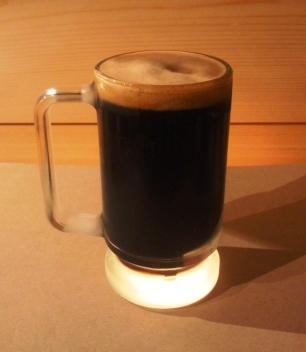
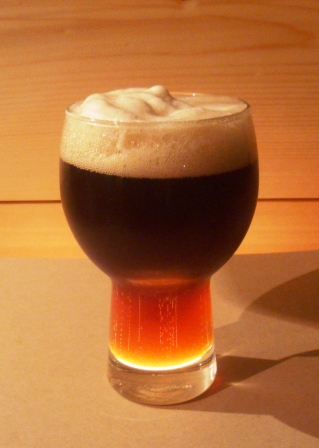
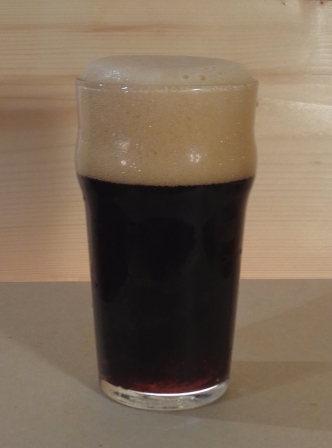
It pours nearly opaque black but holding it to the light reveals very dark ruby color. The head is thick, and dark tan. The aroma is of malt, with toasted notes. A very roasty flavor finishes with mild mouth-watering bitterness and an alcohol tang. A very complex, tasty stout!

Backcountry Nut Brown Ale

Backcountry NBA
There are no nuts in Nut Brown Ale, let’s get that settled right away. Toasted nuts are of course a big source of umami. The nutty flavor in Nut Brown Ale, however, comes from specialty malts including British Brown and Special B that are an integral part of its recipe.

I first brewed this beer on March 20, 1999 and called it Equinox NBA. The idea was to create a home brew that I could take to the “Backcountry Weekend” at Henry Coe State Park, where I was a volunteer docent. We would set up camp at the back country staging area, help the visitors, and then enjoy some grub and homebrew and play for the visitors around the campfire that night. My esteemed band mate at the time Dave Perrin declared it “extraordinary” and so I decided to brew it again.

My updated recipe is brown the way that mahogany is brown, with deep red highlights. It’s as nutty as a jaybird hoarding umami booty. Where the original recipe used corn sugar to boost the starting gravity to 1.050 (12.5 Plato) this one relies on the umami-boosting traits of Lyle’s Golden Syrup, Taikoo golden unrefined sugar from Mauritius and some hand-picked dark Belgian candi sugar crystals. A touch of sea salt and gypsum rounds out the character.

This version was bittered with Challenger hops and flavored with Goldings. I added aroma with some home grown “Feral Fuggle“ I’d gathered from the local hop vines. Brewed with White Labs’ WLP 004 Irish Ale yeast this version picked up a silver medal at the Toronto Anything Goes competition.

Big Burton!

Big Burton123
There’s more to Burton-on-Trent than mouth-puckering India Pale Ale. Back in the good old days (the late 1700s) the Burton brewers brewed a brew called Burton Ale. This was a high-gravity ale indeed, but with less of the high hopping rate that distinguishes IPA. It was often barrel-aged for several years.

Big Burton also draws inspiration from the tradition established by Ballantine Brewing Company, which produced a high-gravity ale for special occasions, often given free to established friends and contacts after as long as 20 years in the cellar. I don’t have 20 years to wait, and thankfully this recipe mellows out nicely in less than a year.

Burton salt is an important flavor component of Burton ale, as it recreates the hard limestone ground water of the Burton-on-Trent brewing area. The signature compounds in Burton’s water are calcium sulfate, potassium chloride and magnesium sulfate. Plaster of Paris mixed with Epsom salts, as it were. Fortuitously for Burton brewers, the mixture of minerals in their hard water allows the extra bitter flavor of the hops to come through without harshness.

Big Burton relies on a blend of five crystal malts of increasing darkness, from 10 Lovibond in color to 120 L, to provide a very rounded caramel profile. Small additions of chocolate and black malts complete the roasty flavor. Barley flakes create body and a firm head. Three kilos of Breiss light dry malt extract give it punch, with a starting gravity of about 13.5 Plato yielding around 6.5% ABV.

The full malty background of Big Burton allows it to carry plenty of hop character. High-alpha Summit hops offer significant bitterness, and Simcoe hops suggest citrus-like fruitiness. Centennial aroma hops are added at the end of the boil. White Lab’s Burton Ale Yeast ferments the brew out with a lot of subtle fruity flavors like apple, clover honey, and pear.

Burton brewers also perfected the art of dry-hopping their beer, and Big Burton pays homage to that tradition with an addition of Willamette hop pellets in the secondary fermenter with four weeks further aging. It’s a Simcoe-sensational brew with a nice citrus aroma and malty finish.

Singe de Reddition Biere de Garde

Biere de Garde2A fancy name for this brew, though it is a farmhouse ale from Northern France. I recall my first encounter with Biere de Garde. I had no idea what it was. I was with a pal who was living in Paris on the Rive Gauche. He took me to a place with a big blackboard covered with the names of different specialty brews. The waiter said something unintelligible to me. My friend said “He’s asking you what you want.” I looked at the board and said “Jenlain” because I liked the name. C’était un choix fortuit.

We’d just had a big meal at a restaurant on the Champs Elysees. The waiter brought a mug that contained at least a liter and a half of beer. “Wow” I thought, but over an hour’s conversation I managed to drink it all. My friend asked “Do you realize you spent $20 on that glass of beer?” I’d just been in Japan where the exchange rate was 135 yen to the dollar. The beer was 65 Francs. I thought that was cheap. It wasn’t–but it was delicious. And the view of the Tour Eiffel was great.

Biere de Garde is the French cousin of Belgian beers from Flanders. This one uses yeast from the Flemish region, very close to the Belgian border, White Labs WLP 072 French Ale yeast. It’s the real secret to the complex flavor, a clean strain that complements maltiness with estery fruitiness that is much milder than many of the Belgian strains.

The grain bill for this version of Biere de Garde features a step-infusion of Belgian specialty malts, together with pale malt, Vienna malt, cara-pils and dark wheat malt. A blend of seven grades of crystal malt plus dark Belgian candi sugar add full-spectrum caramel flavors. Aromatic malt contributes–aroma! A teaspoonful (12 grams) of coarse gray sea salt from Brittany creates subtle roundness of flavor.

I wish I’d had some authentic French hops for this attempt, but they’re hard to come by in Southern BC. Instead I used my homegrown Fuggles and Willamette hops for bitterness, flavor and aroma. It turned out to be a good thing–lots of full-spectrum hop presence on the palate and nose.

Starting out at around 15.5 Plato (1.062) and finishing at about 4 Plato (1.016) the beer has about 6.4% ABV. Copper color, malty nose, bitter finish, slightly sweet, it’s a roundly-balanced high-amplitude beer that won a bronze medal at the Calgary Yeast Wranglers competition. Despite it’s name it is no surrender monkey.

All Aboard! Steam Porter

AllAboardSteamPorter22aw

Anchor Brewing Company of San Francisco gets credit for reintroducing Porter beer to the world, after its production declined to essentially nothing in the place of its birth, London, England. Strictly speaking, because Anchor owns the trademark for the term “Steam” as it refers to beer, this beer is not named Steam Porter.

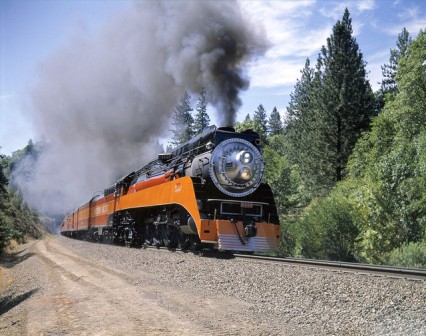
The “steam” part refers to the yeast it uses, namely, White Labs WLP 810 San Francisco Lager. Plus, I can still remember the Coast Daylight steam train that ran from San Francisco to Los Angeles in the 1950s, and the porters that worked on it. A romantic beer in memory of romantic days. All Aboard!

Shasta Daylight

There’s no record of what the original porter beers tasted like, apart from descriptions dating from Edwardian times calling them “sweet, bitter, and a bit burnt all at once. Very warming.” The workers of the time, including porters, accustomed to a bland diet, are thought to have been attracted to the robust, astringent and bitter flavors rarely encountered in their everyday consumption.

Some information exists though, regarding what they were made of. The earliest available recipes, dating from around 1750, show that the most prominent ingredients were pale malt and brown malt. This was not the same as the brown malt that is available today. Back then, the malt was processed by turning it out on a metal floor above a fierce wood fire. Despite its dark character, it retained a lot of sugar and malting enzymes, making it suitable for assuming a large proportion of the mash.

Today’s brown malt is an English product still, but processed in drum roasters like its darker cousins the black malts. Black malts themselves now provide a significant addition to modern porter recipes. But porter is still distinct from stout. Significantly, historically accurate porter should not be opaque black. Rather, it is a very dark ruby red when it is brewed properly, as All Aboard! is.

Besides a hefty addition of modern brown malt to provide a nice rich nutty flavor, All Aboard! uses five grades of crystal malt, plus Melanoidin malt to add more red color to the brown. Small additions of chocolate and black malts create layers of complex flavor. Munton DME provides the base sugars, and flaked barley creates a thick head.

Historically, all manner of strange ingredients were added to create distinctive flavors, most notoriously Nux Vomica. Hangovers were inevitable. This recipe ventures less far. Instead, for interest it settles for 4 grams of gypsum, 2 grams of cracked Grains of Paradise and 12 grams of sea salt.

Traditional Golding and Fuggles English hops provide bitterness and flavor, and homegrown Willamette hops add aroma. With a start at 16 Plato (1.064) this is a beer up to the demands of the most hard-working porter in Londontown.

Aromas of nutty toasted grains combine with nice floral notes. Its malty-full richness, with a chocolaty bitter tang, contrasts with its residual sweetness. At 7.7% alcohol by volume it is an assertive but not hot beverage. Delicious and inebriating, it makes me want to pick up my bags and head for the station.

Country Bitter

Country Bitter2
This is Country Bitter. Formally classified as an English “ordinary bitter“, there is nothing ordinary about this beer. When I first brewed a country bitter in 1995, I used a strain of yeast that I cultivated from a bottle of Thomas Hardy’s Country Bitter, purchased at Marty’s Liquour in Newton, MA. It was brewed by Eldridge Pope & Co. of Dorchester, England, and is no longer available. I would say my attempt was “spot on” as the Brits would, except it was better.

A bit of research told me that the Thomas Hardy recipe called for 85 percent Maris Otter English malt, and 15 percent crystal malt.

This version of Country Bitter uses 2.27 kilos each of Maris Otter and Fawcett Golden Promise base malts for a 20 liter batch. Golden Promise is Maris Otter’s less toasty, sweeter Scottish cousin. To this I added 800 grams of a blend of 7 progressively-darker crystal malts. A two-hour step-infusion mash developed the sugar content of the wort. Mash pH was adjusted with 8.5 grams of calcium chloride. The boil included a touch of sea salt to add roundness of flavor.

Fifteen grams of homegrown Fuggles hops went into the “first wort” runoff. Another 15 grams went into the boil. Twenty grams of Goldings , 10 grams of Willamette and 10 grams of Centennial hops provide flavor. The wort started at about 14 degrees Plato (1.056) original gravity.

I pitched a generous starter of White Labs’ WLP 026 Premium Bitter yeast, helped along with a half-teaspoon of their yeast nutrient. This yeast from Staffordshire England produces a strong, dry beer with mild but complex esteriness.

I had planned to dry hop with additional Willamette hops but the brew really didn’t need it. It was full-bodied and quite bitter, and as it aged the estery characteristics moderated, and the head became nice and thick. This is the third time I’ve brewed Country Bitter, and I’ll do it again!