ZBO: A New Style of Extreme Umami Brew

Zeer Bruine Oude
The name of this beer, Zeer Bruine Oude, or ZBO, reflects its original inspiration from a type of Belgian beer called Oud Bruin–sometimes known as Flanders Brown. The Oud Bruin beers are typically a dark red-brown color, with medium body and very little bitterness. The “Oud” part (old) refers to the long aging these beers undergo, so that their yeast and bacteria content can develop an interesting sweet/sour flavor.

But because this beer draws inspiration also from Guinness Stout, is is a “Zeer” (very) Bruine Oude. It is an extremely dark red-brown color, with an aroma of dark fruits and malt. In the tradition of Guinness, about 3 percent of the wort was soured by incubating it with lactobacillus delbrueckii from White Labs. To this I added about 7ml of Bio-K+ L. Caesi L. Acidophilus blend in rice extract. About 700ml of wort was drawn off from the main batch, inoculated with the lacto bacteria, and incubated at 27 C (81 F) for 72 hours. This mildly sour wort was then pasteurized at 80 C (177 F) for 30 minutes and returned to the main batch, which was fermenting with White Labs Edinburgh Ale yeast. I felt it appropriate to use Scottish yeast because legend has it that Scotland provided the original Belgian yeast strains.

A complex beer demands a complex grain bill, and this is one of the most, incorporating cara-crystal wheat, chocolate wheat, black prinz malt, cara-pils, cara-aroma, and a Belgian blend of cara-Munich, Special B, biscuit and honey malts. Breiss extra-light dry malt extract provided the base. About 225g of Brewcraft Belgian extra-dark aromatic candi sugar helped boost the original gravity to 22.5 degrees Plato (1.090).

Typically, Oud Bruin beers have little to no hoppy character. This one does, though the hop additions are moderate in deference to the original style. About 12 HBU of bitterness are provided by a boiling addition of Warrior and Perle hops, and a flavor addition of German Hallertau. No aroma hops were added.

The result: a nicely sweet/sour beer reminiscent of Scottish Wee Heavy strong ale, Irish Stout and Belgian Oud. Mildly estery with flavors of malt and dark fruit, an intensely malty aroma, complex malt flavors and a bit more hop assertiveness than either the traditional Bruin or Heavy styles offer. The blend of caramelized wheat and barley malts provide an umami backbone that creates a nice, chewy, satisfying meal out of a pint of beer.

A year after the original brew date, and with three months in the bottle, this beer has a long cellar life ahead of it, during which the flavors will continue to meld and blend. It should be an amazing winter quaff next year!

Umami is where you find it…

fast-food-e1356718443366
It’s hard sometimes for me to get the appeal of McDonalds. There I stand in the parking lot, watching the stream of customers going in to fill themselves with the most emblematic of crummy fast foods. And it ain’t cheap! Why do they do it?

Maybe it’s because it’s the umami bomb for the masses? And you don’t have to TIP A GUY to park your car for you.

That’s right, the unassuming burger is packed with umami. Start with the patty–let’s hope it’s “all beef“. Beef is full of glutamate. Grilling the meat induces the further tranformation of proteins in meat into savory glutamate compounds.

Ketchup, the ultimate taste eraser, is well-known to kids who hate their brussel sprouts. Load ketchup on a burger and you add an almost perfectly balanced blend of sweet, sour, salty, bitter and umami. The tomato is full of umami. Cheese is a giant umami blast. Even the bun, with its toasted grain base, is a source of umami. Hold the lettuce. What self-respecting kid takes his burger with lettuce?

Too bad McDonalds doesn’t server beer. I might eat there.

PS: Ask and you shall receive, I guess. Burger King is selling beer some places.

Bombs Away!

umami bombIt has been five years since the Wall Street Journal posted its virtually unnoticed article about “A New Taste Sensation.” It’s about umami, and the way that top chefs and food companies are taking advantage of the natural presence of glutamates and nucleotides to perk up foods from the $185 “Umami Bomb” by cuisinier Jean-Georges Vongerichten to the humble bag of Dorritos.

The sources of umami are equally diverse in their cultural significance. Ketchup has plenty of umami-producing molecules, as do the “diamonds of the kitchen” Black Périgord truffles. Vongerichten’s breathtakingly pricey appetizer uses truffles, along with a Parmesan cheese custard (also high-umami) to carpet-bomb the taste buds of his richly epicurean clientele.

With the ubiquity of its flavors and industry interest, why is the concept of umami still obscure in the mind of the average consumer? Part of the reason perhaps is the influence of the so-called “Chinese Restaurant Syndrome” (CRS) more impressively called “monosodium glutamate symptom complex.” But while many people claim sensitivity to MSG, and many more avoid it because they feel it is somehow an abominably unnatural additive, double-blind placebo-controlled experiments have found no relationship between glutamates and the symptoms of CRS.

Because of the bad rep associated with chemical-sounding words in consumer’s consciousness, the food industry looks to umami in an effort to deliver highly flavored foods while cutting back on other onerous ingredients: fat, salt, sugar and artificial substances. So the glutamates may be in there, but they’re provided by yeast extract, soy or Worcestershire sauce, cheese, mushrooms, anchovy powder and the like.

What’s the implication for the world of beer? While the average quaffer of “lawnmower beer“may not expect or desire the over-the-top richness of an umami bomb in his or her beverage, I believe that the days of water flavored with beer may be drawing to a close, at least in the large US market.

The commercial brands losing the greatest percentage of sales over the past few years have been the light, virtually tasteless lagers. Meanwhile America now has more breweries in operation than it did before prohibition. And while some of these are taking the addition of umami to what I consider a ridiculous extreme, there is no doubt that beer advocates are returning to the classic, full flavor of the beers from the past. This full flavor is in large part contributed by the umami-producing ingredients in their recipes.

What’s That Umami Doing in My Yorkshire Ale?

Yorkshire Ale2Umami in beer comes primarily from two sources. First, barley malt has considerable protein in it (in the range of 10 to 15 percent) and the largest component of this is glutamic acid. The processes required to turn barley into beer involve reactions that convert this to glutamates. Most importantly though, I believe, is the contribution of the yeast. Nutritional yeast, known for its nutty, creamy flavors, provides a sample of this flavor.

Yorkshire Ale provides a vivid example of fermentation-induced umami flavor. The yeast produces a variety of metabolic by-products that create a well-balanced beer that is malty, and even meaty. The flavors are toasty with estery notes that accentuate the malt ingredients. These ingredients are chosen for their ability to contribute glutamates and nucleotides of a wide variety.

Archetypical Yorkshire Ale is a sweet, full-bodied beer with a deep red-brown cola color. It has a thick head and a mash/roast malty smell. It tastes of bread, caramel, chocolate, nuts, brown sugar, carob and earth. In the mouth it’s robust, mildly bitter and astringent, with a roasted finish.

My recipe relies on brown and chocolate malts, with a crystal malt blend, cara-aroma, and melanoidin malts to develop the glutamates derived from Maillard reactions.

Demerara and extra-dark aromatic Belgian sugar contribute caramel to the profile. Flaked barley provides raw glutamates that also contribute to a thick long-lasting head.

This version is bittered with a highly bitter variety, but in a mild proportion. Traditional English hops provide flavor and aroma that does not overwhelm the malty nose. It comes in at 7% ABV, which makes it, while not a Tadcaster Stingo, a funky, earthy–but in a good way–experience as rich as tucking into a plate of roasted mutton chops.

The Umami in Your Fermentation

What’s that missing flavor in the commercial fermented beverages you drink? 

The lack of which leaves you without a fulfilled feeling of gastronomic satisfaction?

It’s the one that’s filtered out of a full-spectrum drink, for sake of commercial shelf-stability.

It’s something called umami.

Why should you care?  Umami is the quality of roundness, of balance.

It works in foods and beverages in minute quantities.  By themselves, the substances in food and beverages that produce the sensation of umami don’t taste like much at all.  But when they combine with other taste and aroma sources, the sum is greater than the parts.

What is Umami?

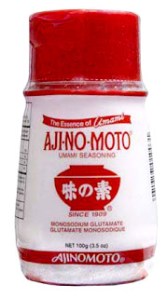
ajinomoto msaThe Umami Principle states that umami-producing ingredients produce full-spectrum beverages.  A “full-spectrum” is a sensation of balance and roundness on the palate, tongue, nose and even the throat.

Names like Heinz, Coca Cola, General Mills—or Anheuser-Busch, resound in the customer’s head with fond memories of picnics and good times.  This is no accident. The techniques of flavor balancing and optimizing consumer experience are well-known to the major commercial food and beverage producers.  It is what they live and die for—or for want of.  The premier names of the food and beverage world produce a consumer experience that is round and flavorful in every way.  Some people would say in too predictable a way, but that’s mass consumerism for you.

The key here is that their products have balance.  What does this mean?  In the world of ketchup, it means a product that is sweet, sour, bitter, salty and umami in just about exactly the same proportions.  Thus, your typical kid can use ketchup as a virtual “flavor eraser” for any unfamiliar foods.

I daresay most people have never heard of umami.  Umami was identified in 1908 by Professor Kikunae Ikeda of the Tokyo Imperial University as the taste sensation created by the presence of certain amino acids in a food or beverage.

For centuries it had remained unnamed, but exploited to balance the flavor of many foods.  While Umami was being formally described in Japan, the sensational French chef Escoffier was creating innovative recipes that combined all five of the basic tastes too, though he didn’t understand the chemistry of his discovery.

Chemically, combining ribonucleotides and glutamates in food and beverages creates a taste impact that is far more intense than the sum of both of these ingredients, while amplifying the effect of the other four taste sensations as well.  Escoffier had discovered Umami.