Tracing the Roots of California Craft

I was raised in the San Francisco Bay Area, about 5 miles from Stanford University campus in Palo Alto. At that time Stanford had an agreement with the city that there would be no bars or liquor stores within a certain distance from the campus. But this arrangement didn’t apply to the next town over, Menlo Park. So, very close to the campus, there were two beer and burger joints that were big hangouts.
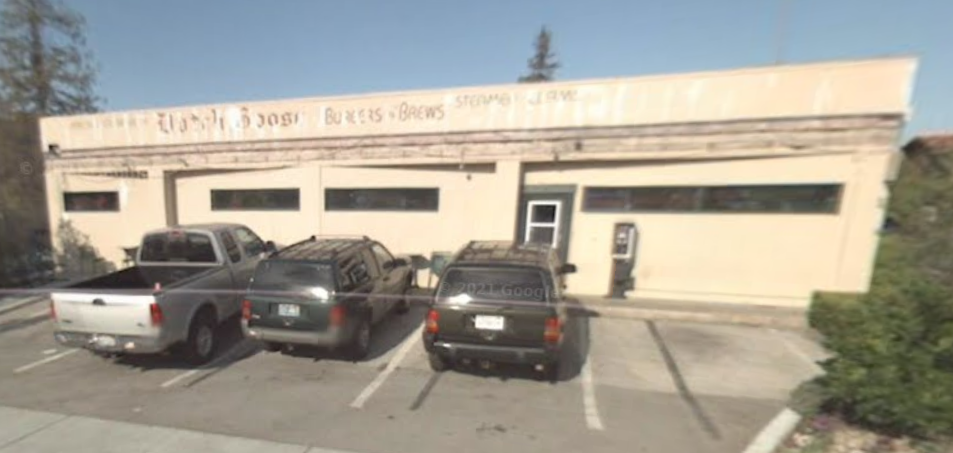
The Dutch Goose as it would have appeared to Fritz Maytag

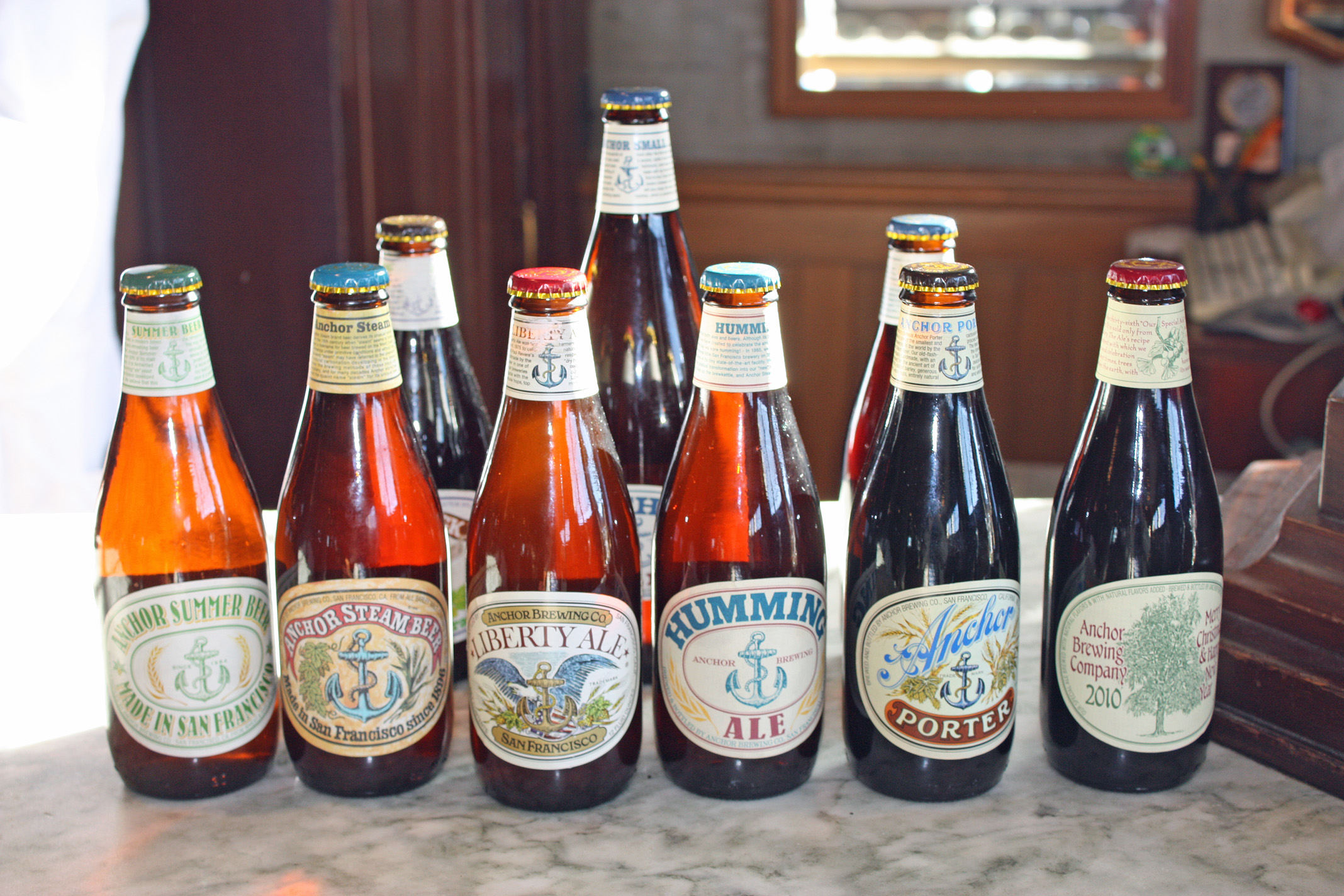
These were The Dutch Goose, on Alameda de las Pulgas, and The Oasis on El Camino Real. Both of them served draft Anchor Steam Beer. (The Goose is still there, much gentrified, but The Oasis is sadly gone.)

The Oasis, shortly before it closed


In 1968 though, Anchor Steam was amazing. I soon discovered another place that served it in San Francisco: The Old Spaghetti Cafe and Excelsior Coffee House in North Beach. (The original, not the chain imitator.)


The “Spag Fac” was actually an old spaghetti factory filled with antiques. A full dinner could be had for $2.25. For this reason it had been a favorite hangout of hipsters and beatniks for years, and they poured Steam beer from Anchor’s ancient Golden Gate style kegs. I hung out there too, with a pint or two before a folk music show at Coffee and Confusion around the corner.

The Old Spaghetti Factory

I was hooked on good beer, but it was expensive. A bottle of Guiness could set you back more than fifty cents in 1973! At that time a half a buck could buy two gallons of gas!
So as a UCSB student with a taste for good beer and no money, I was intrigued when I discovered a Santa Barbara store called Wine Arts, and saw that they sold beer making supplies. The proprietor was very helpful, and sold me a book by home brewing pioneers Stanley Anderson and Raymond Hull. For ingredients I bought two cans of John Bull Extract, a pound of crystal malt, Fuggles hops, and Vierka Munich yeast. Following the instructions from the book, I ended up with a beer that tasted very much like Anchor Steam! This started my 50 year love affair with craft beer.
When I moved back to the Bay Area, I found that others shared my passion, and soon home brewing stores started to appear in towns like San Jose, Morgan Hill, Los Altos, and Palo Alto. There I found an Englishman’s guide to beer brewing to add to my library.

In liquor stores I started to see Anchor Steam in bottles. Brands like New Albion, DeBakker, Golden Bear, Palo Alto Brewing, and Pete’s appeared next to them not long after. Most of these are long gone, some due to undercapitalization, others due to mismanagement. Their proprietors were, after all, home brewers with little business operation experience. (It’s worth noting that home brewer Pete Slosberg chose to contract the brewing of his Wicked Ale out to August Schell Brewing in New Ulm, MN, making it widely available.)

The owner of the home brew supplies store in Chico, however, showed how it was properly done. Ken Grossman’s secret to success: learn how to do everything in an industry where there were limited supplies, equipment, and talent. Then work 12-hour days, seven days a week, for 20 years. Bring the kids to the brewery on Sundays to play among the piles of equipment and materials. Simple! Thus was born Sierra Nevada Pale Ale.

Fritz Maytag, meanwhile, was also showing the industry how it was done. As a Stanford student Fritz haunted The Oasis and Dutch Goose, where, despite its inconsistency he learned to love Anchor Steam Beer. When he heard the company was failing due to falling sales, he bought the place! As the story goes, Fritz was eager to update the Steam Beer recipe, and was visited first by a salesman offering him samples of a new type of crystal malt, and then by one who suggested Northern Brewer hops. He incorporated them both into his new recipe. With its success assured, Anchor Brewing moved to the former MJB coffee roastery, a wonderful Art Deco edifice in the Potrero District of San Francisco.
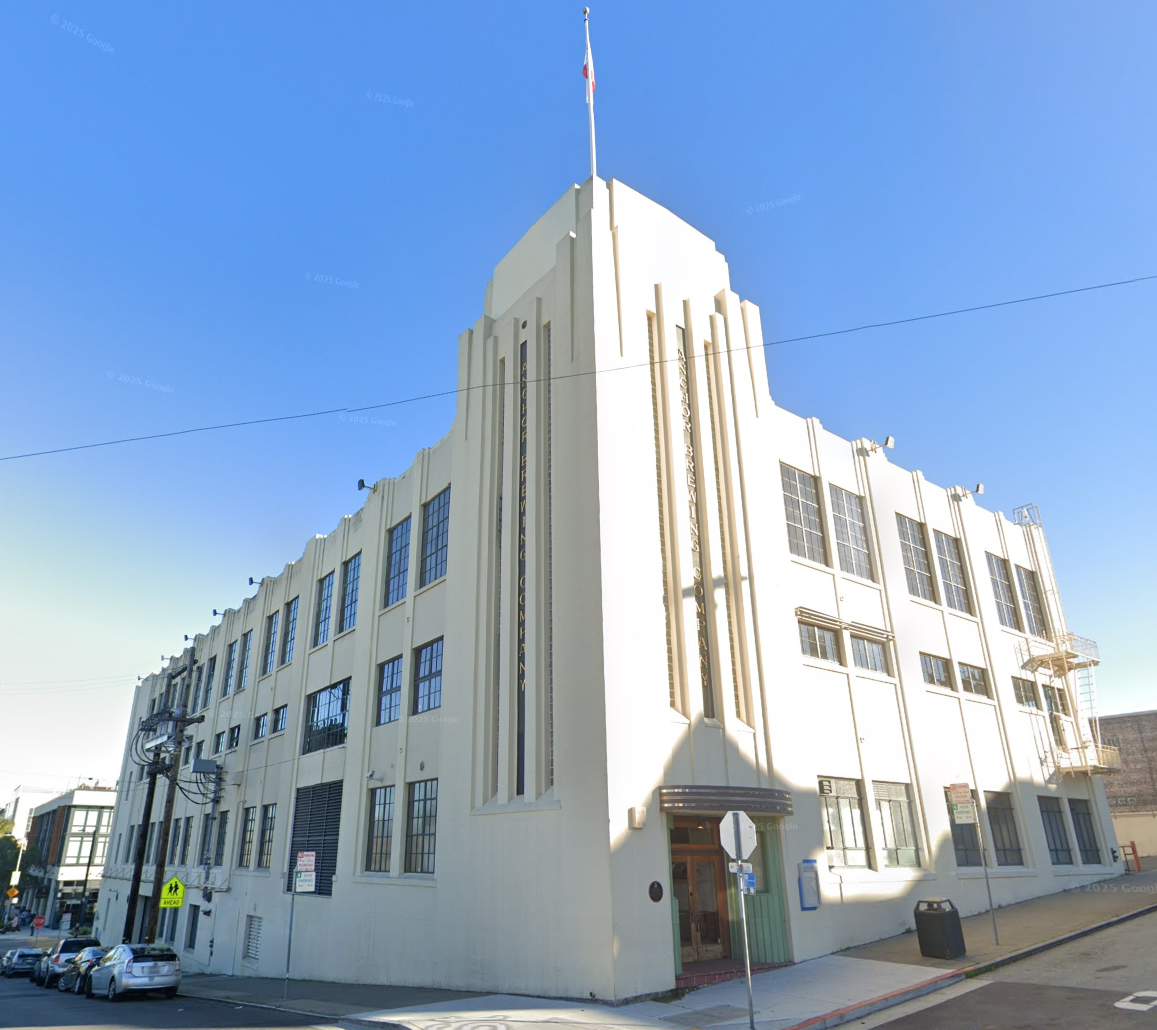
I visited the by-then well-established brewery in 1985. The place was a veritable museum of San Francisco brewing history. There was lots of Anchor breweriana, as well as signage and artifacts from SF breweries of the past. We didn’t get to meet Fritz, but we saw his lab, and it was clear from that how dedicated he was to maintaining the quality of his brew.
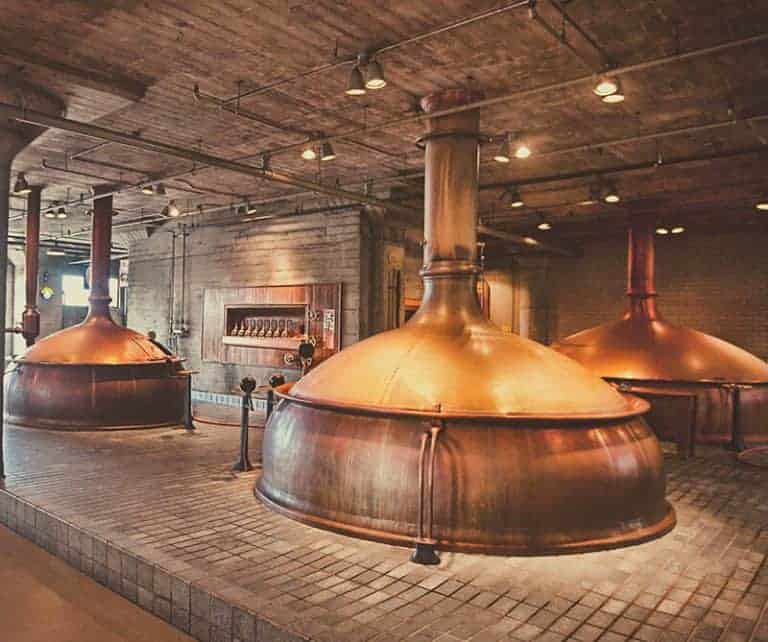
We saw the incredibly beautiful all-copper brewhouse he’d imported from Germany. We saw the antique bottling line, and the filling equipment for Anchor’s 1950s Golden Gate kegs.
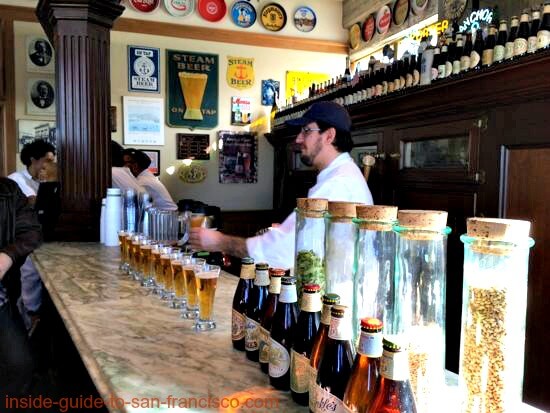
But the best part of the tour was Anchor’s tasting room, centered around an ancient bar from San Francisco’s Barbary Coast past. On this Winter Solstice afternoon in 1985 the sun poured through the clerestory windows behind the bar, and lit up the dark amber and ruby highlights of my glass of Old Foghorn barley wine. It was a moment I’ll never forget.

Epilogue: I recently had a chance to taste an Old Foghorn that had been cellared for 25 years. It was magnificent, a true testament to the meticulous care that Mr. Maytag applied to his brewing.
We compared it to a similarly aged pony bottle of Old Crustacean from Rogue Ales that had definitely seen better days. Thanks Fritz!
Update The Anchor Brewing Company, closed since 2023, has had it’s intellectual property, assets, brands and real estate purchased, and pending the resolution of some structural issues in the building is slated to reopen some time in the near future, hopefully before the end of 2025.

Rum Raisin Brown Stout

rum-raisin-brown-stoutpcThis is a beer that answers the question “What would it be like to brew up a batch of oatmeal raisin cookies?”

In the past, the term “stout” referred to a beer that was extra strong. Thus, we had Porter, and we had Stout Porter, which eventually became just Stout for short. Interestingly, what is now known as Stout is oftentimes rather low in alcoholic content while Porters tend to have an ABV of 5.5% to 6% or more. But historically, Stout was any beer that was as strong as the drinkers that were expected to consume it.

To make this brown stout, start with the ingredients for cookies: wheat malt, oats, sultana raisins. Add to this Maris Otter base malt, crystal malt, a touch of caramel rye malt, and some Cara Munich. Mash at a fairly high temperature to encourage the production of unfermentable sugars that will keep the brew more sweet and full-bodied. Magnum and Amarillo hops are assertive without being overpowering. Add golden syrup at the end of the boil to contribute more caramel flavors. Ferment with a fruity yeast such as London Ale. Soak sultanas in dark rum until they are soft, then whirl the mixture in a blender. Add some to the primary fermenter, and another batch to the secondary, along with a hint of vanilla extract.

The result is not so much a beer that tastes like oatmeal raisin cookies as it is an oatmeal raisin cookie that tastes like beer.

FAQ: AKA The Umami Factor Elevator Pitch

Umami Factor_front1w

WHAT IS THE UMAMI FACTOR?

It’s two things. It’s the title of my new book, and it is the principle for making fermented beverages that provide a complex, mouth-filling, satisfying flavor sensation by balancing multiple aromas with the five tastes: sweet, sour, bitter, salty and umami.

WHAT IS UMAMI?

Umami is the taste sensation of savory foods. The word is Japanese for “delicious” taste. It’s provided by receptors in your mouth, throat, esophagus, and even stomach that detect the presence of glutamates, which are derived from amino acids. The umami sensation is pleasant for the same reason that “sweet” is pleasant.

The body is cued to detect vital, high-engergy nutrients: carbohydrates with sweet taste, and proteins with umami taste. Natural, unfiltered fermented beverages are packed with umami-producing compounds from the fruits, grains, and yeast they are made of.

WHAT IS FULL SPECTRUM FERMENTATION?

Full-spectrum fermentation describes a process of techniques combined with intricate ingredient formulas that create complex flavor arrangements evoking the response “There’s so much going on there! How did you do that?”

Full-spectrum beverages are complex and improbable, but ultimately well-balanced drinks.

coachandsix
WHY IS THIS BOOK DIFFERENT?

It takes a full-spectrum look at beverages from soft drinks to hard liquor. It thoroughly discusses the components necessary for flavor balancing. It examines related spectra, such as the inebriation spectrum and the commitment spectrum. It has a textbook approach to data, with a multitude of tables for ingredients and supplies. It provides recipes and detailed instructions, but more importantly it is a call to chefdom for aspiring fermentation artists. Tally Ho!

Buy The Umami Factor now for a substantial pre-release discount here.

Coachman’s Double Andover Stout

AndoverDstoutWIn 1973 an American with a taste for good beer and little money to buy expensive imports had few options. There were some widely scattered retail shops selling wine-making supplies. At that time brewing beer was illegal, but buying the makings was not. A look inside these shops revealed that they often sold the ingredients for beer too. In fact, since the ingredients were food items, there wasn’t even a tax on them.

Along with ingredients such as canned malt extract, and perhaps some crystal and black malt, there were dried ale yeasts by Edme, and Red Star. Vierka offered light and Munich dark lager yeast. There were also a couple of books available that were pretty simplistic by today’s standards, but were enough to get one started. With a bit of reading it was possible to brew a first batch that was excellent.

C.J.J. Berry’s Home Brewed Beers and Stouts was first published in 1963, shortly after the law changed in England making home brewing legal without a brewer’s licence or duty payment. This was the first book in modern times to deal with the process in sufficient detail to ensure a successful enterprise. An instant success, it sold more than 300,000 copies over four editions.

The recipe names in the book reflect the locale from which a beer example has been drawn. One of these is the town of Andover, Hampshire. A major stage coach stop on the Exeter-London road during the 18th and 19th centuries, it’s no surprise that Andover was known for its heavy, satisfying stout.
coachandsix
In England, circa 1963, it was possible to find numerous bottle-conditioned beers containing yeast samples from their respective breweries. In that sphere at least, the home brewer was afforded a respectable range of possibilities, and Berry’s book suggests exploiting the situation. This recipe similarly takes advantage of the 21st Century’s availability of obscure English yeast strains by employing a Platinum English strain from White Labs’ yeast bank. East Midlands yeast, with its dry finish, low ester production and moderate alcolol tolerance, is comparable to the more familiar Nottingham strain.

This adaptation of Andover Stout, while inspired by the C. J. J. Berry book, also pays homage to William Black’s Brown Stout of 1849, a recipe discovered by the Durden Park Beer Club. That brew featured amber and brown malts, along with the black malt.
Coachman’s adds a full-spectrum touch by taking advantage of the even wider variety of ingredients now available.

A double stout, coming down the highway at 7.8% ABV, this is a monumental beer. A coach and six taking you to the coast.