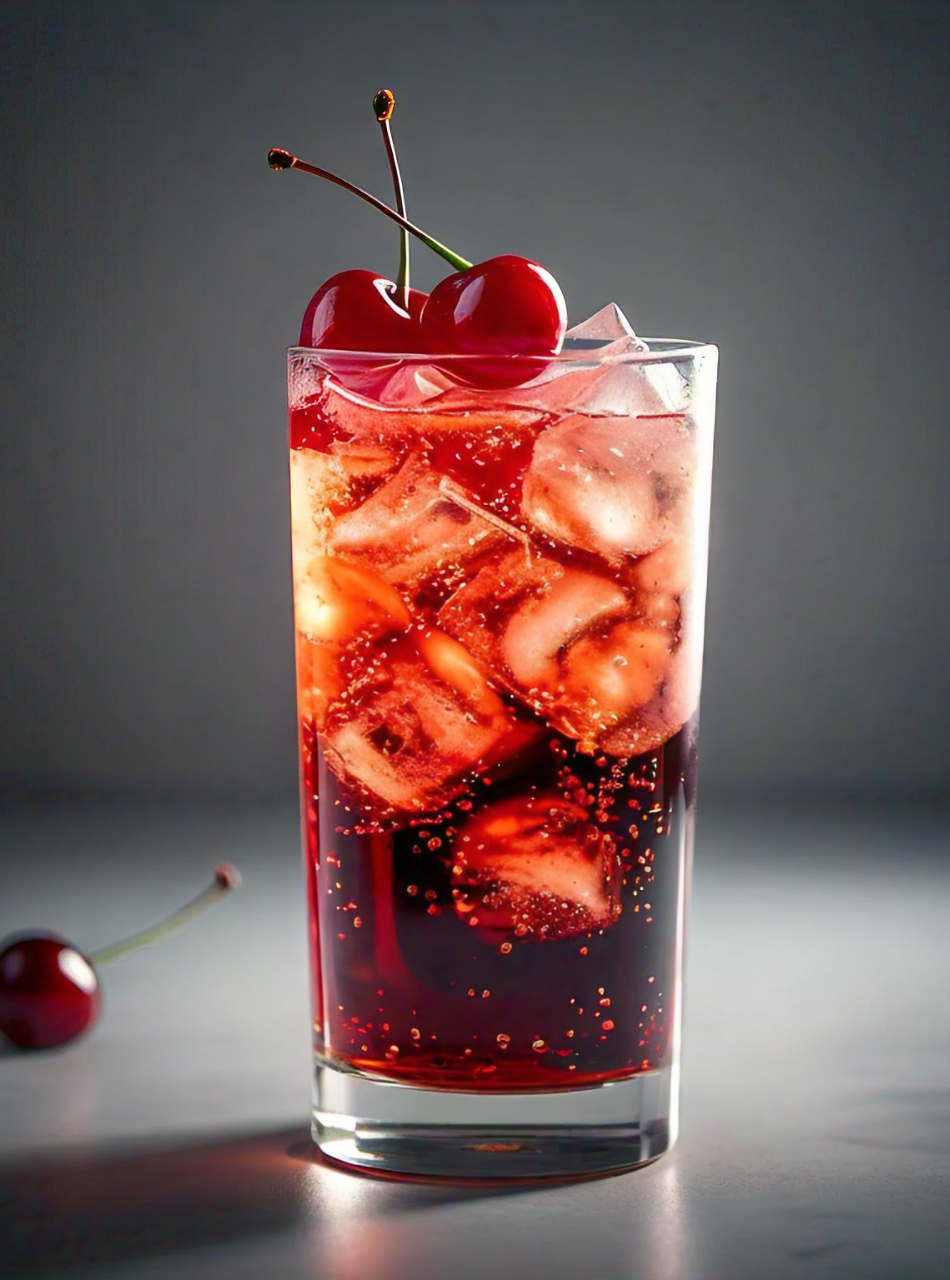
Cherry Kola Coca Soda

Cola is a carbonated soft drink traditionally flavored with kola nuts, coca leaf, lime juice, vanilla, citrus oils, and other flavorings. The drink typically includes caffeine, and modern colas often use synthetic flavoring.
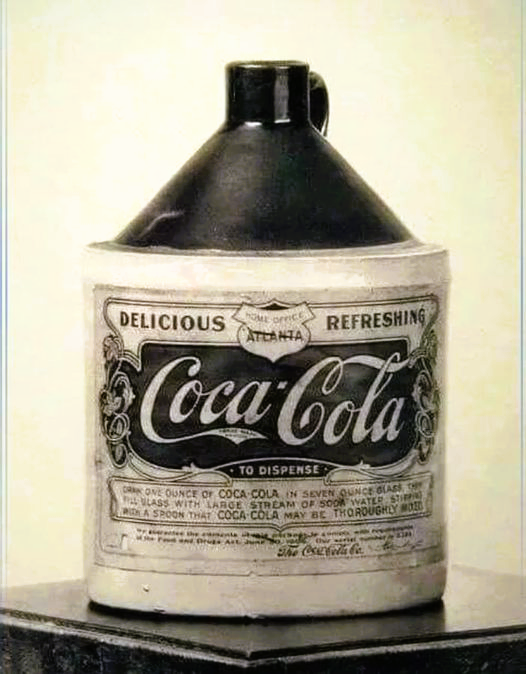
Coca-Cola was invented by Dr. John Pemberton, a pharmacist in Atlanta, Georgia, in 1886. He received a sabre wound in the US Civil War, and suffered from chronic pain which he treated with morphine, leading to an addiction. He attempted to alleviate this with a mixture of coca leaf extract and alcohol, similar to the French beverage of the time called coca wine.  He later adapted the recipe to make Coca-Cola. This syrup was sold to pharmacies and soda fountains, where it was mixed with carbonated water to make the familiar fizzy drink.

Kola

Kola nuts

Kola nuts come from a  tree native to the tropical rainforests of Africa. High in caffeine, kola preparations have been traditionally used in ceremonies and as a flavoring ingredient.

Coca

Coca tea

Coca leaves, primarily from the Erythroxylum coca plant, have been traditionally used in medicinal preparations to alleviate altitude sickness, stomach pains, or hunger.

In the Andes, coca leaves are chewed, or brewed as tea as a social drink. Coca matcha is prepared by whisking leaf powder into hot water, creating a frothy green drink with a singular, unique taste. It is a mild stimulant similar to coffee.

Traditional cola

The basic cola recipe consists of three components. These are an extract of kola nut and coca leaf, a sweet syrup of water flavored with lime juice, vanilla and phosphoric acid, and an essential oil tincture known in Coca Cola parlance as “7X Flavor”. This version of cherry cola substitutes fruit juice for the water in plain cola.

Kola-coca extract

AmountIngredient
15 grKola nut powder
28 grCoca matcha
200 mlVodka 50%  ABV

Mix the powders with the alcohol and let this mixture soak for several days to several weeks. The extract can be decanted off the top of the powders, which can be resoaked up to three times. Adjust the amount of extract added to the recipe to account for its lessening potency.

Kola powder is readily available for purchase online. Coca matcha can also be purchased online, though it may take a bit more hunting to find. Check your local laws as to its legality in your region. Coca matcha has a very distinctive flavor, and there’s no real substitute among natural herbs.

Cherry cola

Cherry-flavored sodas have been around since the late 1800s, when soda fountains would mix cherry syrup into their cola drinks. The official release of Cherry Coke as we know it today was in 1985 and it quickly became a favorite among cola enthusiasts.

Juice syrup

AmountIngredient
20 gramsWild cherry bark
200 mlWater
250 mlLime juice
9.5 gramsPhosphoric acid
10 mlVanilla
3 litersApple-cherry juice
1.25 kgCane sugar

Simmer the wild cherry bark in the water for 20 minutes, and strain out the solids. Heat the juice and sugar mixture to 75C (167F) and allow this  to cool under cover. Add together the juice syrup, the bark extract, lime juice, acid, and vanilla into a jug.

Flavor tincture

AmountIngredient
6 DropsLemon oil
4 DropsOrange oil
2 DropsCoriander oil
2 DropsNutmeg oil
2 DropsCinnamon oil
1 DropNeroli oil
50 mlNeutral spirit (75-95% ABV)

Mix the oils with a neutral spirit such as Everclear, 24 to 48 hours prior to final mixing of the syrup. This will allow the oils to be fully dissolved into the spirit.

Kola Coca syrup

AmountIngredient
50 mlKola coca extract
About 3.5  litersJuice syrup
17.5 mlFlavor tincture

Add together the extract and tincture into the jug with the juice syrup. Top the mixture up to four liters. The kola coca syrup is now ready to mix with carbonated water. A ratio of 10% to 20% syrup to 80%to 90% water (adjust to taste.)

Jasmine Rice Wine

Making alcoholic beverages by using rice as a source of fermentable substances has been practiced for millennia. The catch is, rice does not come with built-in enzymes to convert its starchy parts into sugar. In her grace though, Gaia has provided a magical way to create the transformation, in the identity of an interestingly flavored and aromatic mold.

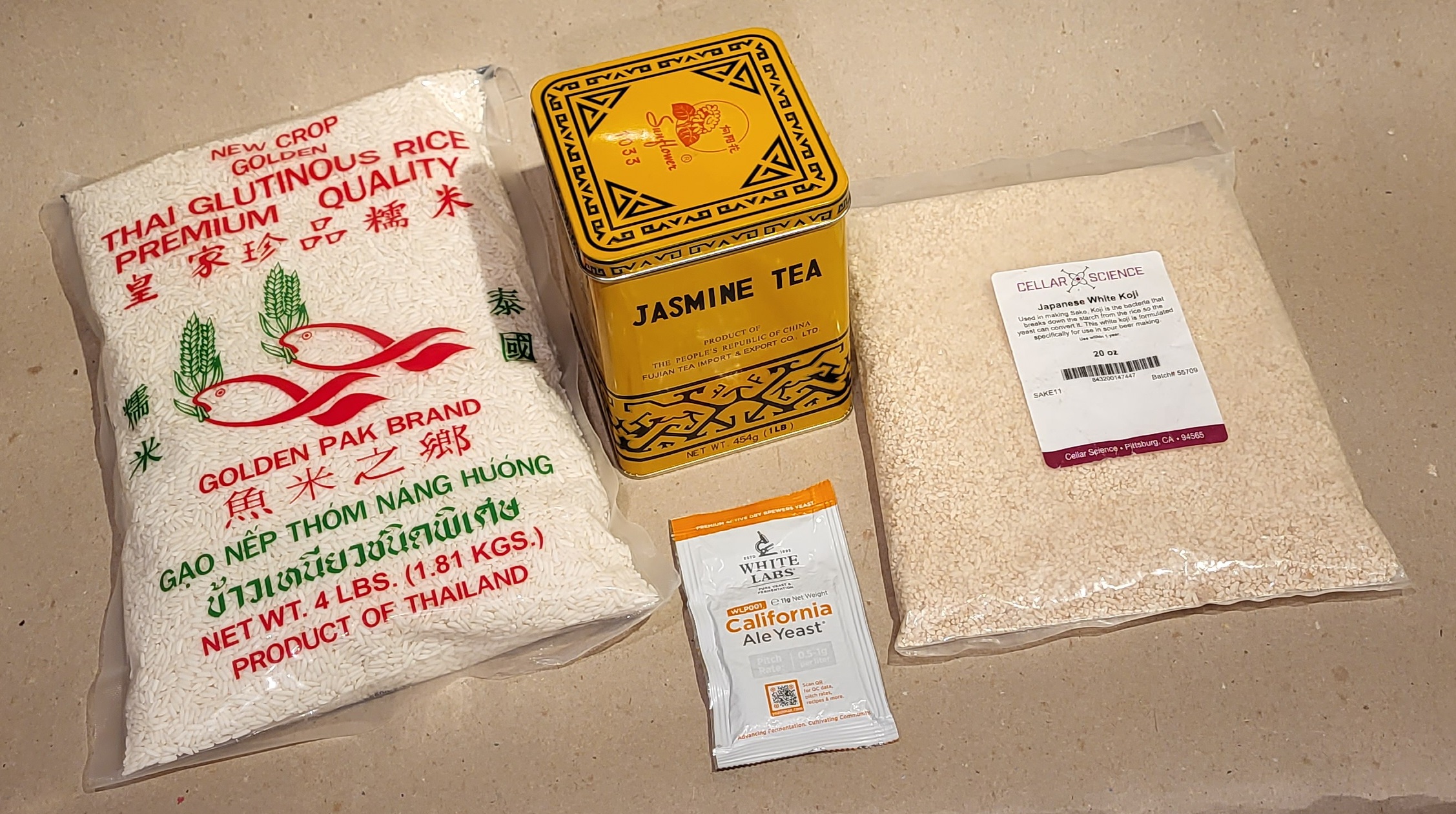
Four ingredients make this jasmine rice wine: Thai sweet rice, Chinese jasmine tea, Cellar Science (R) Japanese white koji, and White Labs California ale yeast.

Fermentations Using Rice

When the mold Aspergillus oryzae is grown on rice, it manufactures as part of its growth cycle the very enzymes needed to produce the sugars it will consume. And if a strong yeast colony is introduced into a watery mixture of moldy rice it takes these sugars instead, and turns them into alcohol.

The mold, however is quite particular about the condition of the rice it infects. To cultivate a thriving colony of malting mold careful attention must be paid to the process of cooking the rice.

Steamed Rice Instructions

For a four-liter batch of rice wine, start with about 1500 gr of rice. Place the rice in a large sieve and wash it with a water shower until the water runs clear from it. Use your hand to rake the rice and agitate any flour into solution and down the drain.

Put the rice in a pot and cover it with soft, iron-free water or deionized water. Soak the rice for one to two hours. The objective is to raise the water content of the rice to about 25 to 35 percent by weight. You can check this if you wish by weighing a quantity of rice before and after soaking. When it weighs 30 percent more, it’s done. Alternatively, if a grain of rice will crumble to a mash between finger and thumb, it is ready.

Pour the rice back into the sieve and allow it to drain for an hour.

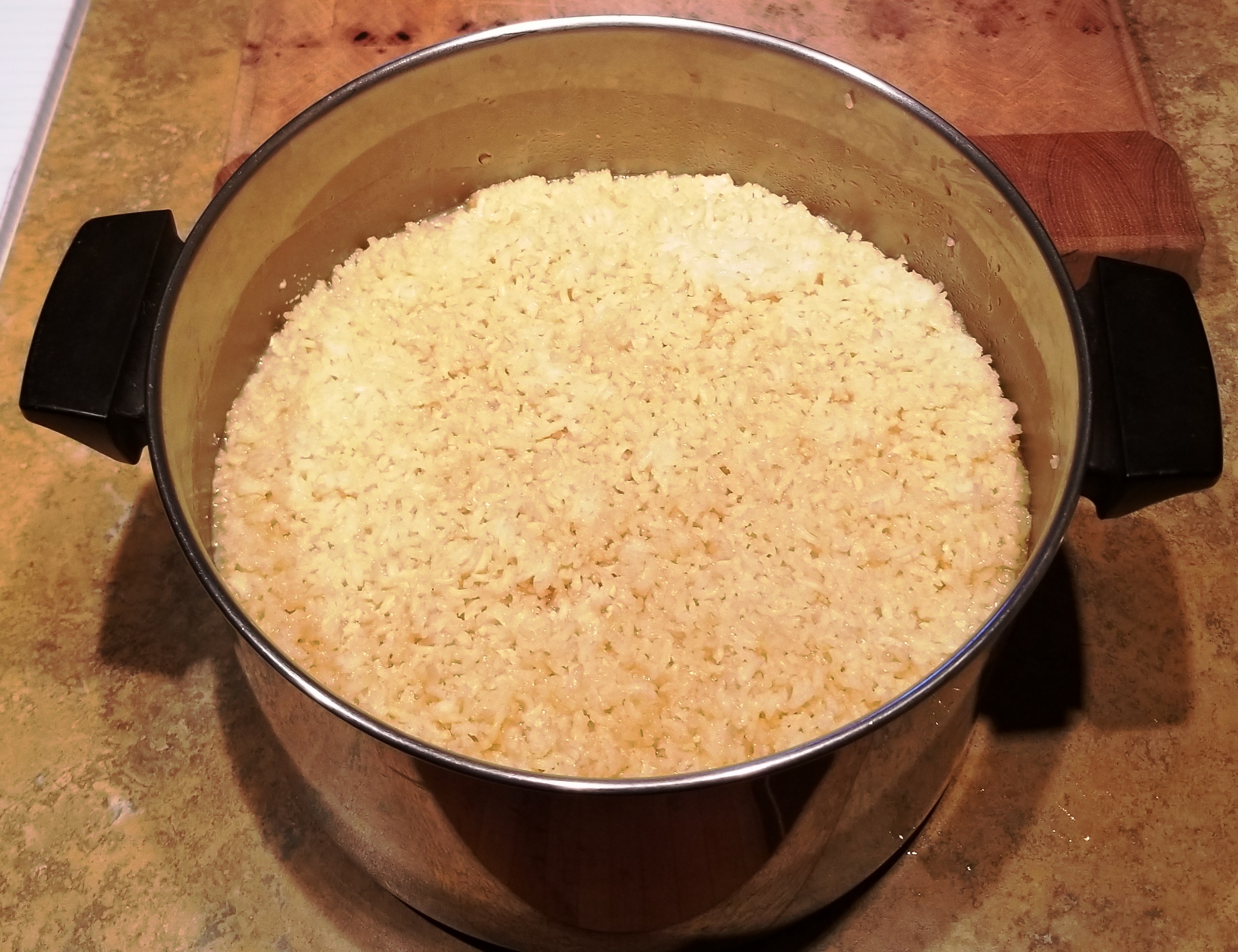
Using a lidded pot that is of a size that will just accept the sieve, steam the rice with enough water for about one hour. Do not allow the rice to touch the water, and place a dish towel over the rice and under the lid to prevent condensed water from dripping onto the rice. After an hour test the rice for doneness. It should be translucent, slightly sticky, and of a chewy texture when bitten. It is important to get the correct consistency.

Turn the rice out on to a sanitized baking sheet. Fluff the grains to separate them, and allow to cool to 30 °C (86 °F.)

At this point the rice is ready to be inoculated with the aspergillus strain of your choice: Japanese sake strain koji, the Korean makgeolli strain nuruk, Chinese hóng qū mǐ, (red yeast rice) or Shanghai yeast ball.

Jasmine Rice Wine Recipe

1.5 kg Thai sweet rice

8 tbs Chinese jasmine tea, in 4L filtered water

White Labs California ale yeast.

280 gr Cellar Science (R) Japanese white koji,

Make a Moto (Koji starter)

Make a moto

To make the rice wine starter steam 300gr of the rice as previously described. Mix the white koji rice well into the cooled sweet rice, and turn the mixture into a pot. Cover with a cloth and keep warm for 24 to 48 hours, stirring occasionally, until a fine white fuzz appears on most of the grains.

Main Mash

Strain the wine liquid from the rice solids.

Steam and cool the remaining 1.2 kg of rice, and add this to the pot, along with the four liters of cooled jasmine tea, and the yeast. Keep the pot warm for 7 to 10 days, until any fermentation activity stops and the rice is liquified. Putting the pot in an oven with the light on works well.

Clarify

Finish fermenting and settling.
Clarify and age.

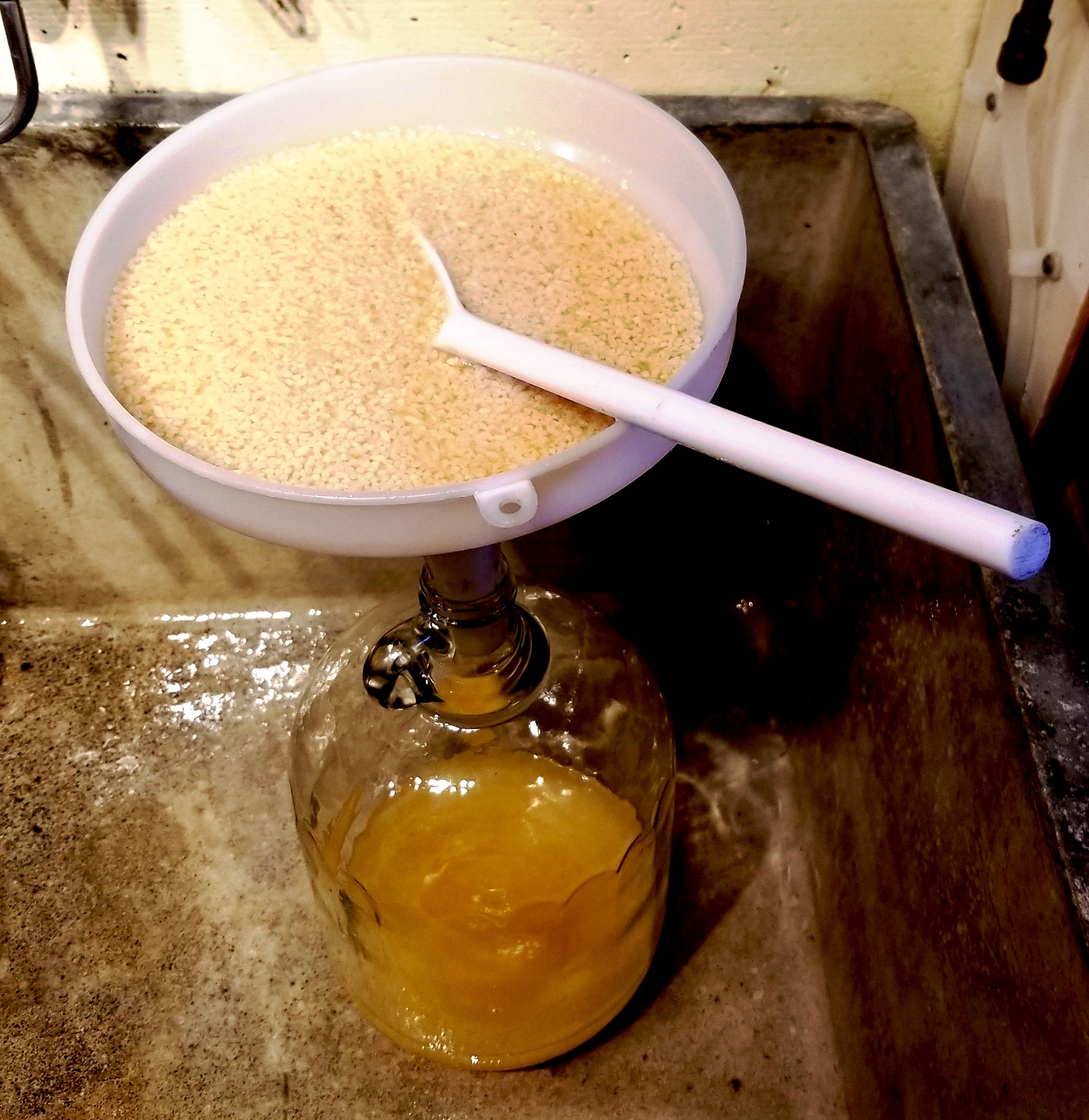
Strain the solid rice remains from the liquid, into a jug. Allow it to finish fermenting, and settle out the solids. This will take 2 to 3 months.

When the liquid is clear syphon it into a clean jug, leaving the sediment behind. It should be tart and tannic, with a fruity nose and hint of sweet.

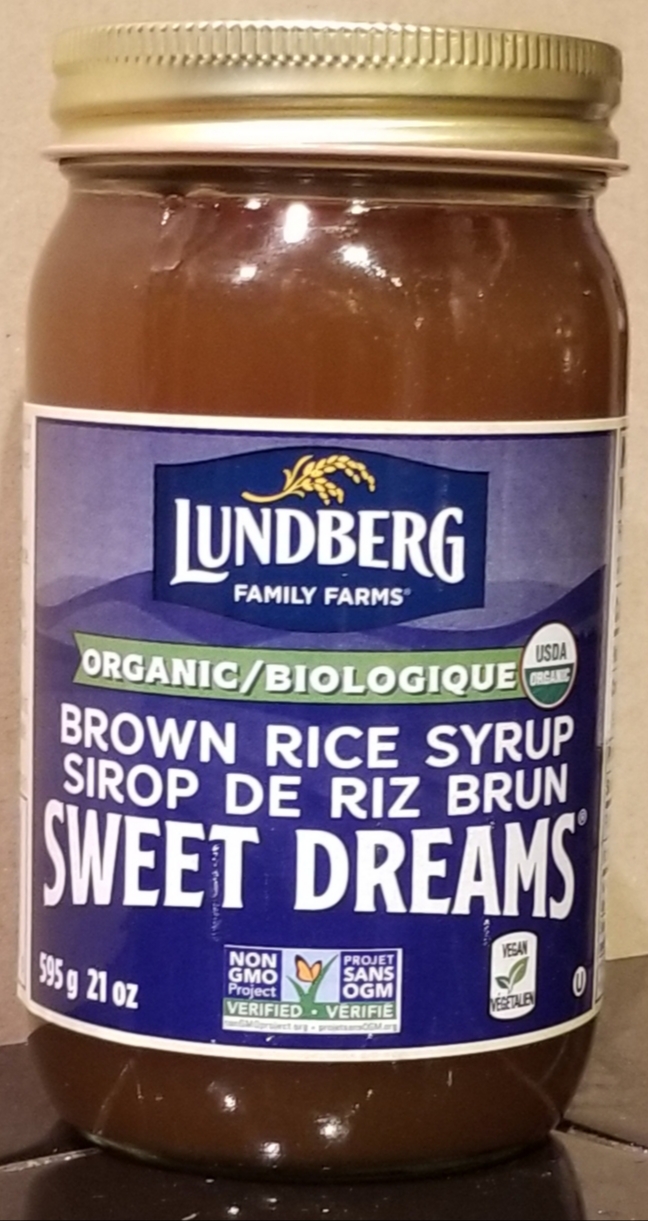
Sweeten it further to your taste with brown rice syrup. If this causes an unwanted haze, use wine clarifier and rack it again.

Sweeten with brown rice syrup.

The rice wine is ready to bottle. It will improve with age.

Speedwell Skullcap

Speedwell SkullcapPCHere’s a drink named after a Grateful Dead concert that never was. No wait! Hear me out. Altamont Speedway was the site of the death of the 60s hippie era. The Grateful Dead, scheduled to play, got the hell out when things got way out of hand. Speedwell (Veronica officinalis) is an herb that is sometimes considered a weed. Deadheads like herb and weed, right? Speedwell—Speedway, close enough for a Deadhead no doubt.

The Altamont Speedway with 300,000 hippies

The Altamont Speedway with 300,000 hippies


Speedwell is slightly bitter and astringent, with a taste a bit like green tea. Its medicinal use includes relief for coughs, and the plant is rich with vitamins, tannin, and anti-inflammatory compounds.

Skullcap, or Mad-dog Weed (Scutellaria lateriflora) is a perennial mint, purported by early North American settlers to cure rabies, hence its common name. Skullcap’s current use, however, is in the promotion of a sense of well-being, a property any Deadhead can relate to. The active ingredient is the flavone scutellarin, a phenolic compound. The name skullcap refers to the shape of its flowers, which resemble early military head gear. Speaking of head gear, here’s a Grateful Dead skull cap.

Deadhead Skull Cap

Deadhead Skull Cap

Schisandra chinensis (五味子 in Chinese, wǔ wèi zi, literally “five-flavor berry”) is so named because it is simultaneously sweet, sour, salty, bitter, and spicy. A traditional Chinese medicine, it calms the spirit by balancing yin and yang. Western pharmacological studies have shown that it is effective in treating “heavy metal intoxication,” so—‘nuff said.

Grapefruit-like pomelo juice and zest, the main ingredients for the now-defunct liqueur Forbidden Fruit, along with Montmorency cherry extract, angelica and orris roots round out the ensemble. Drink up lovers!

Tamazcal Opotunia

prickly pearPC

The tamazcal (Nahuatl for “house of heat,” or possibly Aztec for “bath house”) is a sauna-like structure invented by the pre-Columbian inhabitants of Central Mexico, and the region south to present-day Costa Rica. These structures are still in use, performing a similar function as that of a sweat lodge or steam room.

Starting around 7000 BCE, complex agrarian cultures began to form in this region, along with the creation of sedentary agricultural villages, and ceremonial centers. Purification rituals were among the curative ceremonies performed by these indigenous people, designed to rejuvenate the body after battle or a ball game.

Tamazcal: Aztec Sauna or Sweat Lodge

Tamazcal: Aztec Sauna or Sweat Lodge


The way in which these therapies cleanse the body is believed to involve “heat shock proteins” (HSPs) that are created in response to environmental stresses, in this case the high temperature and humid environment of the tamazcal. HSPs are involved in binding antigens and presenting them to the body’s immune system. They also provide an essential role in the formation of other proteins, and in the body’s cellular repair system.

Along with the heat therapy provided by the tamazcal, many practitioners suggest imbibing in another source of HSPs: Opotunia-Ficus-Indica, or prickly pear cactus. The fruit is high in antioxidants, particularly betalains (betanin and indicaxanthin), two molecules that give the juice its nearly fluorescent red color. With a flavor reminiscent of watermelon, the juice is rich in Vitamin C, and is one of the first cures for scurvy! The plant also contains at least five other antioxidant flavinoids. The pulp of the fruit contains the carbohydrates glucose, fructose and starch, proteins, and fibers rich in pectin.

Eleuthero root (Eleutherococcus senticocus)is a medicinal plant native to northeast Asia. It is often referred to as Siberian Ginseng, as it is widespread in North Korea and throughout Northeastern Russia. It is not the same as Panax ginseng, the more common Chinese herbal medicine. Eleuthero is considered an anti-oxidant “adaptogen” that reduces the impact of stress, while stimulating the central nervous system.

Rooibos or “red bush” (Aspalathus linearis) is a broom-like legume growing in the fynbos (shrubland) of the Western Cape of South Africa. The leaves of the plant are used to make a bush tea, which has been popular there for generations. Rooibos leaves are oxidized (“fermented” in tea parlance) to create their red color and complex flavor. They are high in Vitamin C and antioxidant flavonoids. Cinnamic acid gives them a honey-like aroma. Rooibos has a bitter/sweet taste that has been described as slightly pungent and “warm.”

These three ingredients combine in Tamazcal Opotunia with citrus juice and zest to create a potent tonic, cleansing indeed but also a refreshingly cool end to a steamy session in a tamazcal, a hammam, or just a hot August night.

FAQ: AKA The Umami Factor Elevator Pitch

Umami Factor_front1w

WHAT IS THE UMAMI FACTOR?

It’s two things. It’s the title of my new book, and it is the principle for making fermented beverages that provide a complex, mouth-filling, satisfying flavor sensation by balancing multiple aromas with the five tastes: sweet, sour, bitter, salty and umami.

WHAT IS UMAMI?

Umami is the taste sensation of savory foods. The word is Japanese for “delicious” taste. It’s provided by receptors in your mouth, throat, esophagus, and even stomach that detect the presence of glutamates, which are derived from amino acids. The umami sensation is pleasant for the same reason that “sweet” is pleasant.

The body is cued to detect vital, high-engergy nutrients: carbohydrates with sweet taste, and proteins with umami taste. Natural, unfiltered fermented beverages are packed with umami-producing compounds from the fruits, grains, and yeast they are made of.

WHAT IS FULL SPECTRUM FERMENTATION?

Full-spectrum fermentation describes a process of techniques combined with intricate ingredient formulas that create complex flavor arrangements evoking the response “There’s so much going on there! How did you do that?”

Full-spectrum beverages are complex and improbable, but ultimately well-balanced drinks.

coachandsix
WHY IS THIS BOOK DIFFERENT?

It takes a full-spectrum look at beverages from soft drinks to hard liquor. It thoroughly discusses the components necessary for flavor balancing. It examines related spectra, such as the inebriation spectrum and the commitment spectrum. It has a textbook approach to data, with a multitude of tables for ingredients and supplies. It provides recipes and detailed instructions, but more importantly it is a call to chefdom for aspiring fermentation artists. Tally Ho!

Buy The Umami Factor now for a substantial pre-release discount here.

Peach Melba Melomel

PMelbaW1Nellie Melba was one of the most famous opera singers of the Victorian Age. Such a colossal superstar was she that the esteemed chef Escoffier created for her a delectable dessert, Peach Melba, which he presented to the attendees of the Duke of Orléans’ grande fête for her on the back of a swan ice sculpture.

Peach Melba combines two flavors that are made for each other: peaches of course, and raspberry puree. Put these on vanilla ice cream, top with spun sugar, and you are in bliss of operatic dimension.

Peach Melba easily suggests itself to interpretation as a melomel, that is, mead flavored with fruit. It should certainly hint of sweetness, as Nellie Melba’s voice did, but not cloyingly, rather, surprisingly strong and clear.

As raspberries are intensely fragrant, they will dominate the nose of such a melomel, but will not overpower the taste of the peaches. The flavor of the honey should be something of an embellishment, as was the spun sugar atop Nellie’s dessert.

To this end choose a lighter honey, which can reliably be found among the selection of wildflower-based products from the Pacific Northwest. This example uses premium fireweed honey from western Canada, which had a lovely amber color and mildly caramel flavor.

The mead is lightly sweetened with wine conditioner to an off-dry state, leaving some tartness on the tongue, but with the very smooth finish created with three years of bulk aging. You can be sure this is going to come out for a spring celebration on the Vernal Equinox!

Lime N.D. Coconut

Lime N.D. CoconutLime N.D. Coconut is a soda that is also a health drink! N.D. stands for “New Dimension.” (It’s also a sideways hat tip to Harry Nilsson.) It is a new direction in taking the Umami Principle to soft drinks. It tastes like nothing I’ve ever had in a traditional soda, and qualifies as a true umami flavor bomb. It is also the most nutrient-packed tonic drink I’ve devised so far.

This idea started when a friend encouraged me to try coconut sugar, because it was delicious. I did, and it was. Much coconut sugar comes from Indonesia with Thailand also an important producer. This suggested to me a Southeast Asian flavor theme, one that might produce in a soda, perhaps the enjoyment that comes from a well-made Tom Kha Gai.

My formula for a full-spectrum soft drink calls for a juice, a root, an oil, an herb, a sugar, a berry, and an acid. Here’s how those ingredients combine for Lime N.D. Coconut.

Faddish coconut water seems to crowd the health-food section lately. High in potassium and other minerals, it’s the latest trend in hydration and tasty too. Twenty years ago on a Mexican beach I bought a green coconut, the top lopped off with a machete, for a few pesos. The water inside was sweet and refreshing. The Whale Watcher Bar in Cabo would put in a shot each of rum, vodka, tequila, gin and Pernod—a Coco Loco. Twenty years later, Thai coconut water seems to be everywhere.

Shredded coconut, not the baker’s kind, just plain, unsweetened meat, adds to the coconut aroma of the drink, with a good dose of glutamate as well. Coconut milk, made from shredded coconut meat and water, contains about 0.37 percent glutamate. The amino acid is the most abundant of those in coconuts.

Key limes are easy to get now too. Their juice provides acidic sourness to balance the sweetness of the coconut water and sugar. The key lime zest provides citrus oil aromatics on top of the coconut aroma.

Fresh, thinly sliced galangal, a rhizome reminiscent of ginger, but with a stronger, more peppery taste, is the root component, with strong medicinal properties. Galangal and lime juice are mixed as a tonic in some Asian countries.

Lemongrass is a well-known tonic herb from India, now widely cultivated in Southeast Asia. Lemongrass provides this drink with both an aroma of lemons and a taste mildly reminiscent of them, without the sourness.

Coconut sugar is produced in Southeast Asia, on organic palm farms. Creamy and caramally sweet, it’s drawn from the flower buds of cocos nucifera. Coconut sugar contains minerals, B vitamins, and a large amount of glutamic acid. Glutamine is the largest constituent among the 16 amino acids found in coconut sap sugar, more than double the amount of the next highest, threonine.

Goji berries (wolfberry) go into Chinese tonic soups and herbal teas. Some Chinese wines also use goji berries. They contain about 500 times more Vitamin C than oranges, and befitting an umami bomb, the ingredient glutamic acid. At the same time polysaccharides from wolfberry protect neurons against the overstimulative effects of too much neurotransmitter such as glutamate.

A garnish of Thai basil and Kaffir lime leaves creates an amazing cloud of distinctive aromatics surrounding the glass. While Lime N.D. Coconut is refreshingly complex in flavor, this healthful tonic can be further tweaked with a shot of white rum and a twist of lime. Served on the rocks it is a great summer quencher.

Sparkling Meyer Lemonade

Meyer Lemonade
Some recipes are a description of a state of mind. Sparkling Meyer Lemonade is one of those. Meyer Lemonade. To me that recalls the dwarf lemon tree Mom had in the back yard. When we moved to California from Ohio, things like year-round bearing citrus trees were a wonder. Mom said the best tasting lemon was the Meyer, a cross between an ordinary lemon and probably, a Mandarin orange, and that was the variety she planted first.

Mom was right. Cuisinistas like Martha Stewart and Alice Waters discovered the Meyer lemon a while after Mom did. Dad would pick 20 of them, perhaps some time around July, cut them in half, mash them in a bucket, add sugar, ice, water, and a good handful of the fresh mint that also grew abundantly in the wondrous California garden. The aroma was spectacular.

The taste was also refreshing, more tart than the concentrate that came in the six-ounce cans of the day. That thought reminds me of Schweppes Bitter Lemon, a lemon-quinine tang that I came to love perhaps 20 years later than those backyard picnics. Alas, it appears that Bitter Lemon is not made any more. I thought I’d make my own.

First of all, there is the joy of fizz, and that is accomplished using the frozen syrup method for mixing sparkling water with juice and sweetener. Secondly, this recipe furthers the idea that a good soft drink should contain a juice, a root, an herb, an oil, and a sugar.

Sparkling Meyer Lemonade starts with 150 ml of Meyer lemon juice per liter of lemonade. Before squeezing the lemons I peeled the zest from 6 per liter (about 5 grams) and set that aside. The sugar is 100 grams per liter of evaporated raw organic cane juice.

For the root, this recipe has 3 grams per liter of ginger. The herb is 0.3 grams of lemon balm per liter. I heated the juice, sugar, herb, zest, and root to infuse and pasteurize the ingredients, and let them cool for 12 hours. I strained the brew, pasteurized it again, cooled it and dispensed 115 ml of the syrup into each 500 ml swing-top bottle. After I froze these bottles I topped them up with carbonated water, and kept them cold.

This drink is Huckleberry Finn meets Dom Perignon. Aging it in the fridge really makes a difference. Less than 0.3 percent alcohol I estimate, but still full of a richness coming from the raw sugar, the herby, citrus aromatics, the mandarin-meets-lemon flavor and the tingle on the tongue that Huck rarely if ever tasted.

Bombs Away!

umami bombIt has been five years since the Wall Street Journal posted its virtually unnoticed article about “A New Taste Sensation.” It’s about umami, and the way that top chefs and food companies are taking advantage of the natural presence of glutamates and nucleotides to perk up foods from the $185 “Umami Bomb” by cuisinier Jean-Georges Vongerichten to the humble bag of Dorritos.

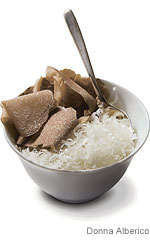
The sources of umami are equally diverse in their cultural significance. Ketchup has plenty of umami-producing molecules, as do the “diamonds of the kitchen” Black Périgord truffles. Vongerichten’s breathtakingly pricey appetizer uses truffles, along with a Parmesan cheese custard (also high-umami) to carpet-bomb the taste buds of his richly epicurean clientele.

With the ubiquity of its flavors and industry interest, why is the concept of umami still obscure in the mind of the average consumer? Part of the reason perhaps is the influence of the so-called “Chinese Restaurant Syndrome” (CRS) more impressively called “monosodium glutamate symptom complex.” But while many people claim sensitivity to MSG, and many more avoid it because they feel it is somehow an abominably unnatural additive, double-blind placebo-controlled experiments have found no relationship between glutamates and the symptoms of CRS.

Because of the bad rep associated with chemical-sounding words in consumer’s consciousness, the food industry looks to umami in an effort to deliver highly flavored foods while cutting back on other onerous ingredients: fat, salt, sugar and artificial substances. So the glutamates may be in there, but they’re provided by yeast extract, soy or Worcestershire sauce, cheese, mushrooms, anchovy powder and the like.

What’s the implication for the world of beer? While the average quaffer of “lawnmower beer“may not expect or desire the over-the-top richness of an umami bomb in his or her beverage, I believe that the days of water flavored with beer may be drawing to a close, at least in the large US market.

The commercial brands losing the greatest percentage of sales over the past few years have been the light, virtually tasteless lagers. Meanwhile America now has more breweries in operation than it did before prohibition. And while some of these are taking the addition of umami to what I consider a ridiculous extreme, there is no doubt that beer advocates are returning to the classic, full flavor of the beers from the past. This full flavor is in large part contributed by the umami-producing ingredients in their recipes.